Asbestos Insulation in Your Attic? Here’s What to Do Next
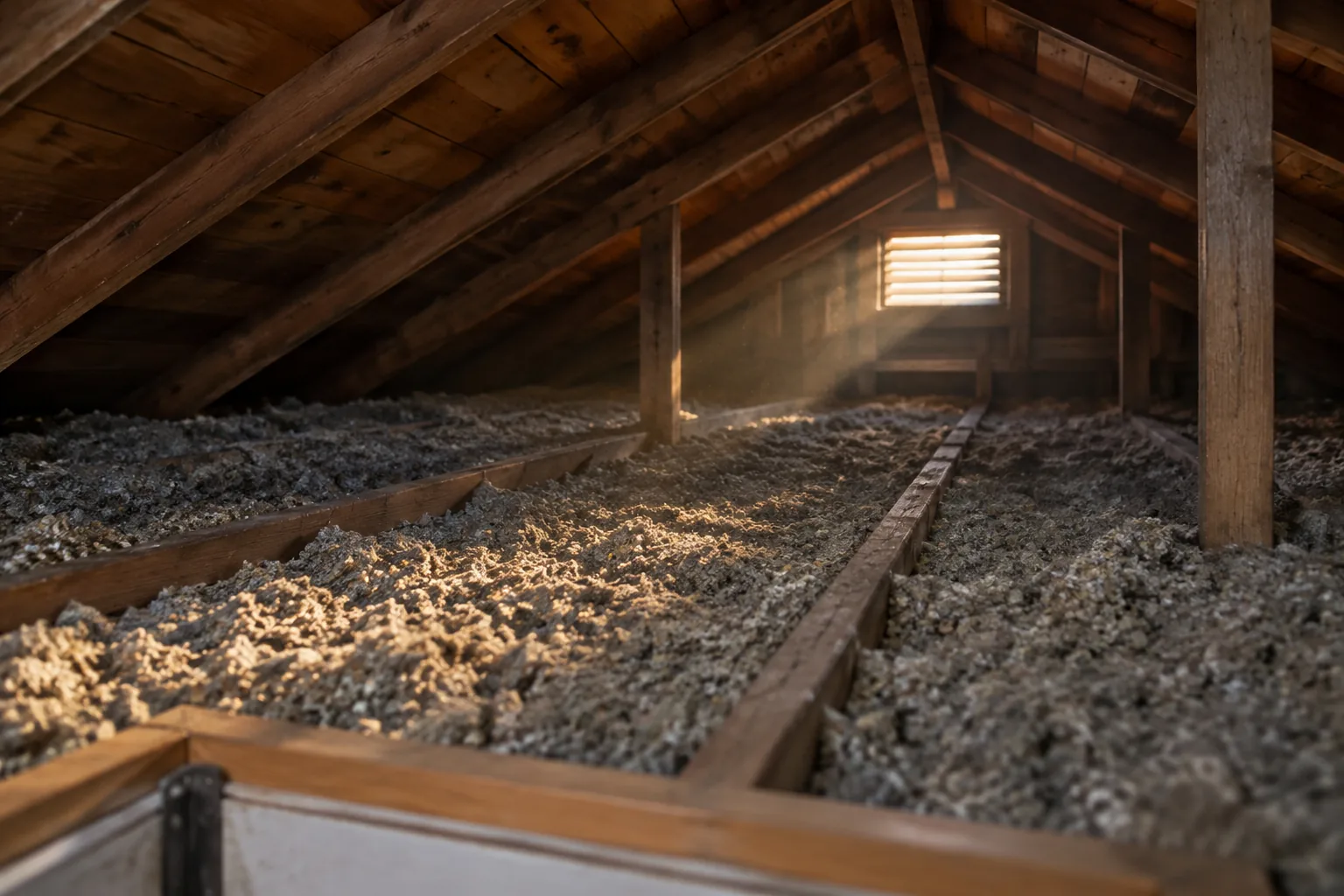
Quick answer: If you suspect asbestos insulation in your attic, leave it alone. Don't walk on it, move it, vacuum it, or take a sample. The U.S. EPA says pebble-like vermiculite insulation should be treated as if it contains asbestos. Before any attic work, talk to a qualified asbestos professional. Appearance alone can't confirm asbestos.
You popped the attic hatch for storage, a repair, or because you heard scratching, and you found loose, pebbly, gray-brown or gold-flecked insulation. Now you're wondering whether it's asbestos and what to do. This guide is for Orange County homeowners in exactly that spot. It explains what suspect insulation can look like, why disturbing it matters, who is qualified to assess it in California, and when ordinary attic cleanup and insulation restoration can safely happen.
This guide is general safety information, not a diagnosis, medical advice, or legal advice.
First, Protect the Attic and the People in Your Home
Asbestos becomes an inhalation concern when fibers get into the air. The EPA says it plainly: the first step is not to disturb the material. Keeping the attic closed costs you nothing while you work out the next step.
What to do if you suspect asbestos insulation
- Close the hatch and stop any planned attic work. That includes storage trips, DIY repairs, and contractor visits.
- Keep kids and pets out. The EPA specifically advises against letting children play in an attic with vermiculite.
- Don't store boxes up there. Every trip in and out can stir up loose-fill material.
- Write down what you saw. Note where the material is and roughly how much, and take a photo from the hatch if you can do it without climbing in.
- Contact a qualified asbestos professional before you start any renovation, rewiring, insulation upgrade, or cleanup that would disturb it.
What not to do: move, vacuum, sweep, or sample it yourself
Household vacuums, shop vacs, brooms, and leaf blowers can push fine fibers into the air and spread them through your home. DIY sample kits mean disturbing the very material you're trying to protect. Please don't try to bag, remove, or “seal” suspect insulation yourself. South Coast AQMD, the regional air district that covers Orange County, notes that it does not recommend homeowners perform asbestos removal because of exposure and cross-contamination risk.
What to do if work has already disturbed suspect material
If a contractor, a pest, or a DIY project has already disturbed suspect insulation, stop the work, keep people out of the affected area, and don't try to clean up spilled material with a vacuum or broom. Then contact a qualified asbestos professional for advice on the affected area. If you're worried about possible exposure, the EPA suggests talking to your doctor.
What Does Asbestos Insulation in an Attic Look Like?
Some insulation types are known to raise concern, but how a material looks is a clue, not a diagnosis. Here's what homeowners usually notice.
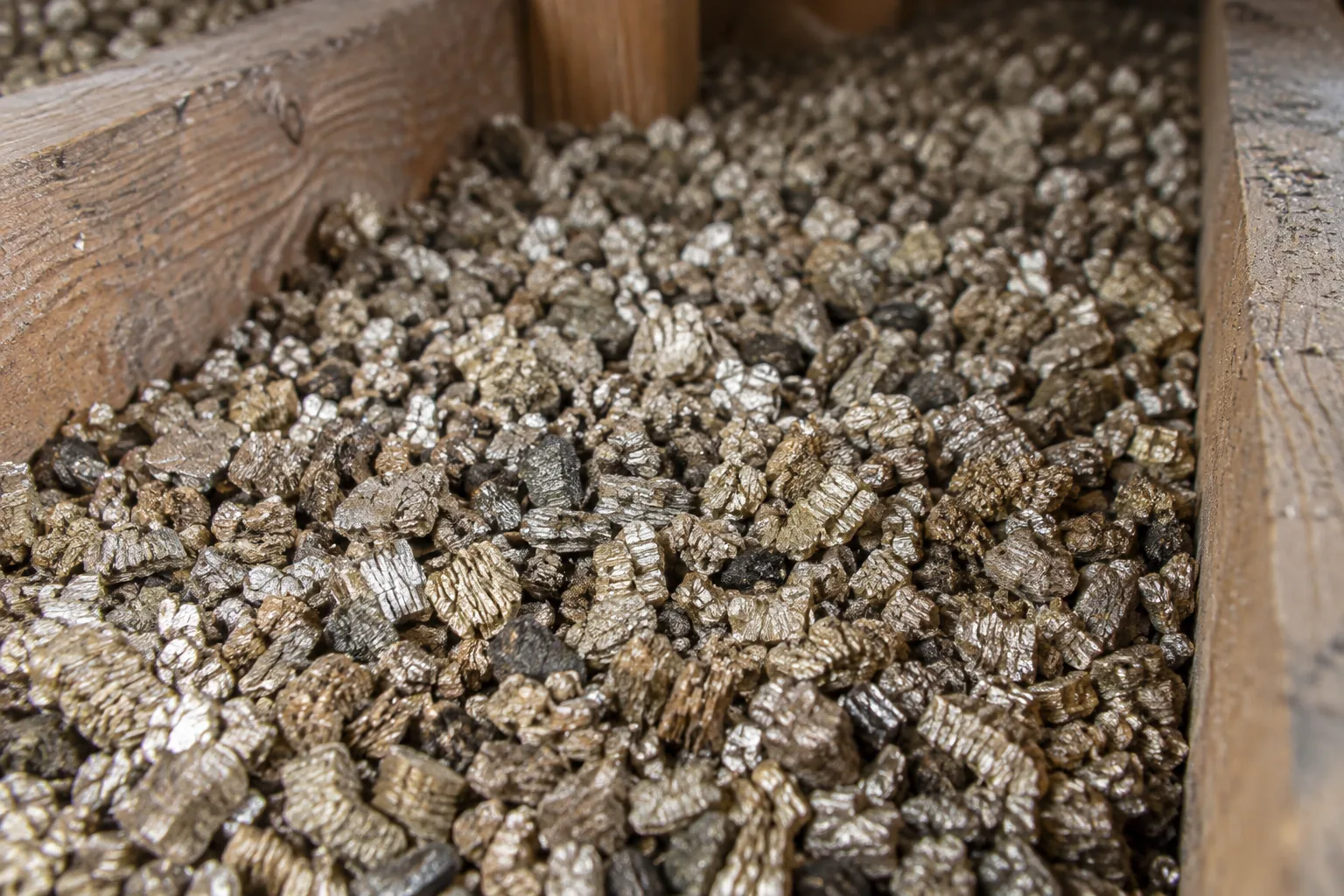
Vermiculite and Zonolite: pebble-like, often gray-brown or silver-gold
Vermiculite is a natural mineral that puffs up into light, accordion-like granules when heated. According to the EPA's vermiculite insulation guidance, vermiculite insulation is a pebble-like, pour-in product that's usually gray-brown or silver-gold. A mine near Libby, Montana supplied more than 70 percent of all vermiculite sold in the U.S. from 1919 to 1990, and that vermiculite was contaminated with asbestos. Much of it was sold under the brand name Zonolite. That's why the EPA tells homeowners to assume vermiculite insulation may contain asbestos.
Other suspect materials near attic pipes, ducts, and ceilings
Loose-fill insulation isn't the only thing that gets attention in older attics. Wrap on older pipes, ducts, or boilers, plus some ceiling textures and spray-applied materials, can also be suspect depending on the age of the home and the product. Only a qualified professional can say which materials need evaluating for your planned work.
Why appearance can't confirm asbestos
Color, texture, and the age of your home can raise suspicion, but none of them proves anything. Two materials that look identical can have different contents. The opposite is also true: you can't rule asbestos out because insulation “looks fine.” That's why the safe default is to treat suspect material with caution and leave confirmation to a qualified professional.
| What you notice | What it may suggest | What it can't prove | Safe next step |
|---|---|---|---|
| Pebble-like, gray-brown or silver-gold loose fill | Possible vermiculite, which the EPA says to treat as asbestos-containing | Asbestos content or fiber levels | Leave it undisturbed and consult a qualified asbestos professional before any work |
| Old wrap on pipes or ducts | An older material that may need assessment | Whether it contains asbestos | Don't cut or remove it; include it in a professional assessment |
| Older home built before modern product bans | Higher chance that older materials are present | That any specific material contains asbestos | Plan an assessment before renovation |
| Insulation that “looks normal” | Nothing conclusive | That the attic is asbestos-free | Ask a professional if major attic work is planned |
When Can Attic Work Disturb Asbestos Insulation?
Most risk comes from activity, not from the material just sitting there. The EPA notes that if you don't go into the attic, handle, or disturb vermiculite insulation, you're unlikely to be exposed to fibers from it.
Storage, foot traffic, repairs, and insulation upgrades
- Walking across joists or crawling to reach a vent or junction box
- Running new wiring, lighting, solar conduit, or HVAC ducting
- Adding new insulation on top of old loose fill
- Cutting into ceilings during a remodel
- Wildlife activity, like raccoons or rats nesting and tunneling through the insulation
The EPA also points out that a contractor's work in the attic can carry fibers into other areas of the home. That's why it matters before you schedule any attic job.
Why intact and disturbed materials call for different advice
Undisturbed material in a closed attic is a different situation from material that's been scattered by a repair crew or an animal. A qualified professional will look at the material's condition, where it is, and what work you're planning before recommending a path.
How to Get a Qualified Asbestos Assessment in Orange County
In California, different professionals handle different parts of an asbestos project. Knowing the roles helps you hire the right person and avoid conflicts of interest.
Ask whether the provider is a Cal/OSHA Certified Asbestos Consultant
According to Cal/OSHA's asbestos information page, only a Cal/OSHA Certified Asbestos Consultant (CAC) can provide asbestos consulting services such as building inspection, abatement project design, sample collection, and clearance air monitoring. Cal/OSHA also notes that consultants can't have a financial interest in the abatement contractor hired for the same project, which keeps the assessment independent.
Ask who collects samples, which lab analyzes them, and what the report covers
Before you hire anyone, ask:
- Who will collect any samples, and what are their credentials?
- Which accredited laboratory will analyze them?
- Will I get a written report covering the materials, their locations, and recommendations for my planned work?
- Is the assessment separate from any company that would do the removal?
Confirm licensing and project scope before hiring an abatement contractor
If abatement is recommended, the contractor doing it should hold the right California authorization. The Contractors State License Board explains that a C-22 Asbestos Abatement contractor performs containment, encapsulation, or removal and disposal of asbestos-containing construction materials, and must be registered with Cal/OSHA. Get the scope, disposal plan, and completion documentation in writing, and check the license on the CSLB website.

Should Vermiculite Insulation Be Removed?
Not always. The EPA recommends leaving vermiculite insulation undisturbed and hiring a professional asbestos contractor if you plan a remodel or renovation that would disturb it. Whether to leave it in place, enclose it, or remove it depends on the material, its condition, and your project. That decision belongs with qualified professionals.
Leave in place, manage, enclose, or abate, as advised for your project
If you're not planning attic work, a professional may advise leaving the material alone and limiting attic access. If you're planning a remodel, solar installation, or insulation upgrade, the advice may change. Rules can also apply to renovation projects in this region, including South Coast AQMD Rule 1403. Ask your consultant how current requirements apply to your home rather than relying on general summaries.
Coordinate renovation or insulation work after the asbestos scope is resolved
Keep copies of the survey, any abatement records, and any clearance documentation. Share them with every contractor who will work in the attic afterward, so nobody accidentally disturbs material that was left in place.
Where Ordinary Attic Cleanup Fits
Orange County Attic Cleanup focuses on wildlife-related attic cleanup, decontamination, and insulation restoration. We don't provide asbestos inspection, testing, or abatement services.
When to contact Orange County Attic Cleanup
Once a qualified asbestos professional has resolved the asbestos scope, or confirmed the planned work can safely go ahead, we can help with the attic issues our team handles every day: removing droppings and contaminated insulation left by rats, raccoons, and other wildlife, decontaminating the space, sealing entry points, and installing fresh insulation. Browse our attic cleanup and insulation guides to see how that process works.
Why suspected asbestos must be assessed first
Ordinary cleanup means removing and handling insulation. That's exactly the kind of disturbance the EPA warns against when vermiculite or other suspect material is present. Getting the asbestos question answered first protects your household, the crews working in your attic, and the rest of your home.
Key Takeaways
- If you suspect asbestos insulation in your attic, don't disturb it. Close the hatch and pause any attic work.
- The EPA says to treat pebble-like vermiculite insulation as if it contains asbestos.
- Appearance, color, and home age are clues, never proof.
- In California, a Cal/OSHA Certified Asbestos Consultant handles assessment, and a properly licensed and registered contractor handles abatement.
- Routine attic cleanup and insulation replacement should happen only after the asbestos scope is resolved.
Conclusion: Your Safe Next Step for Asbestos Insulation in the Attic
Finding possible asbestos insulation in your attic is stressful, but your first move is simple: leave it undisturbed and get qualified advice before anyone works up there. Once the asbestos scope has been handled, you can turn to restoring a clean, well-insulated attic. When you're ready for wildlife cleanup, decontamination, or new insulation after clearance, request your free attic inspection and our team will walk you through the next steps.
Ready to restore your attic after clearance?
Get an upfront quote for wildlife cleanup, decontamination, and fresh insulation.
Can I tell if attic insulation contains asbestos by looking at it?
No. Appearance can raise suspicion, but it can’t confirm or rule out asbestos. Vermiculite is usually pebble-like and gray-brown or silver-gold, and the EPA advises treating it as if it contains asbestos. Other materials may look ordinary and still need assessment. A Cal/OSHA Certified Asbestos Consultant can advise whether evaluation or testing makes sense for your project.
Should vermiculite insulation be removed?
Not automatically. The EPA recommends leaving vermiculite undisturbed and hiring a professional asbestos contractor only if renovation or other work would disturb it. The right choice depends on the material’s condition, where it is, and what you plan to do in the attic. A qualified asbestos professional should guide that decision.
Can I test or remove attic asbestos insulation myself?
It’s not recommended. Taking samples or removing insulation disturbs the material and can release fibers into your home. South Coast AQMD says it does not recommend homeowners perform asbestos removal because of exposure and cross-contamination risk. Contact a Cal/OSHA Certified Asbestos Consultant for assessment, and a properly licensed abatement contractor if removal is needed.
Does the age of my home prove that the attic insulation contains asbestos?
No. Older homes are more likely to contain older building materials, but age alone doesn’t prove any specific material contains asbestos. Newer-looking insulation can also sit on top of older material. If you’re planning attic work in an older Orange County home, ask a qualified professional whether an assessment is appropriate first.
Who should I call about suspected attic asbestos in Orange County?
Start with a Cal/OSHA Certified Asbestos Consultant, who can inspect, collect samples if appropriate, and recommend a plan. If abatement is needed, hire a contractor with California’s C-22 classification or equivalent asbestos certification and Cal/OSHA registration. South Coast AQMD offers homeowner guidance and links to state contractor and consultant lists.
Is it safe to live in a house with vermiculite insulation in the attic?
The EPA says that if you don’t go into the attic, handle, or disturb vermiculite insulation, you’re unlikely to be exposed to asbestos fibers from it. Limit trips into the attic, don’t store items there, and keep children out. If you have health concerns about past exposure, talk to your doctor.
Can wildlife disturb asbestos insulation in my attic?
Animals such as rats and raccoons can tunnel through, nest in, and scatter loose-fill insulation. If you suspect both wildlife activity and asbestos-containing insulation, tell every professional involved before work starts. The asbestos scope should be assessed by a qualified professional before routine cleanup or insulation removal begins.
What documents should I keep after asbestos work in my attic?
Keep the consultant’s written survey or report, the abatement contractor’s scope and disposal records, and any clearance documentation. Share copies with future attic contractors so they know what was removed, what (if anything) was left in place, and where. These records also help when you sell your home.
Have Questions About Your Attic in Orange County?
Our specialists inspect your attic, identify moisture or rodent entry points, and give you an upfront, no-pressure repair plan.