Free Attic Inspection in Orange County for Wildlife and Damage
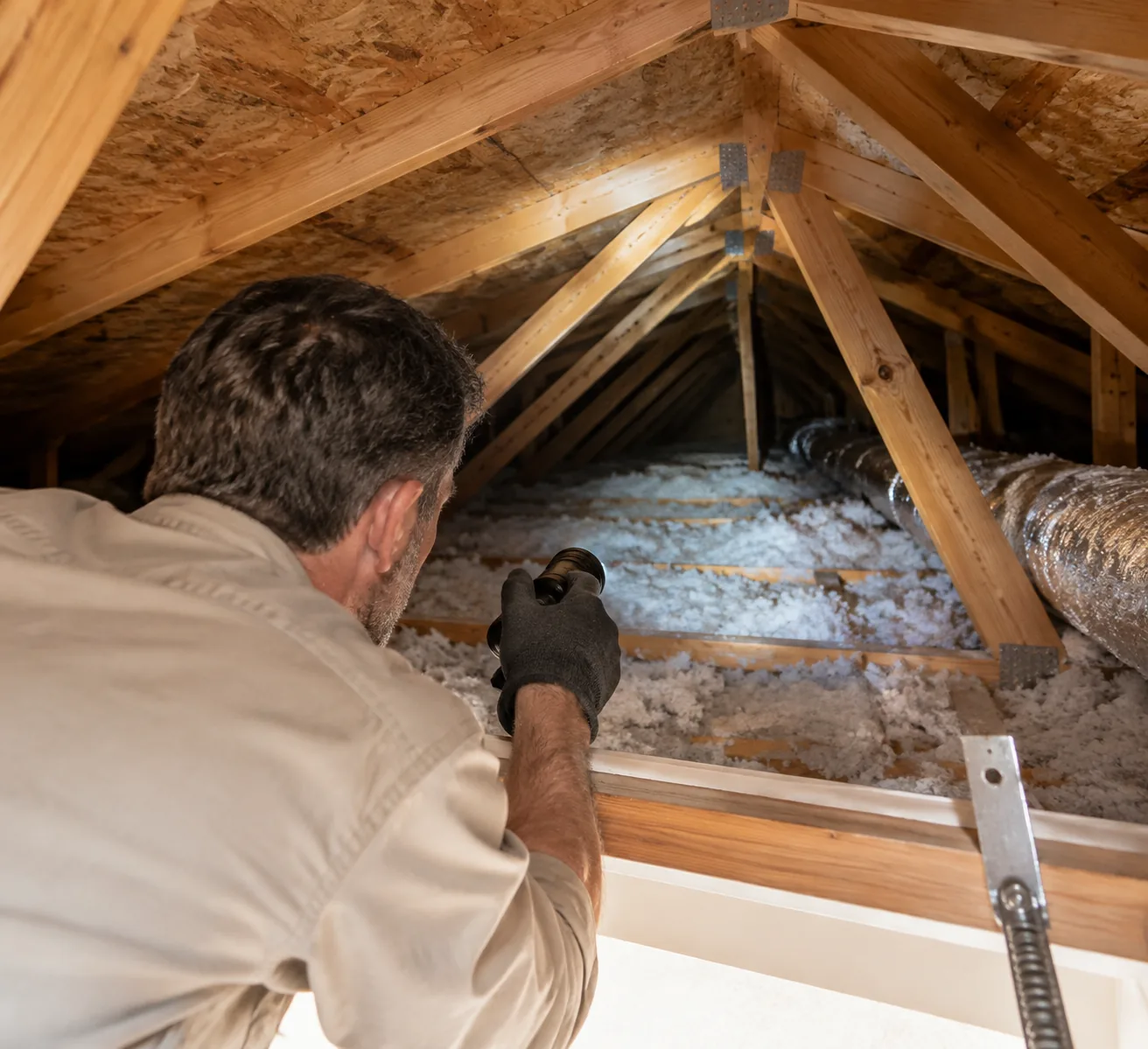
Hearing scratching above the ceiling, noticing a persistent animal-related odor, or finding damaged insulation can raise a practical question: what is happening in the attic, and what should happen next? A focused attic inspection can help identify visible signs of wildlife activity and restoration needs without confusing that service assessment with a full home inspection.
Orange County Attic CleanUp & Wildlife Control lists humane animal removal, attic decontamination, insulation restoration, and a free inspection and quote across Orange County. This guide explains what an attic assessment may cover, what it cannot certify, and how to prepare for a conversation about next steps.
Need help now? Call (877) 395-6877 to ask about a free inspection and quote.
What our Orange County attic inspection checks
An attic inspection for wildlife or cleanup concerns is a visual assessment of areas that can be reached safely. It looks for signs such as animal activity, droppings or nesting material, disturbed insulation, likely access points, and visible related damage. It can help clarify possible next steps, but it does not certify the whole home or provide specialized lab testing.
Animal activity and contamination clues
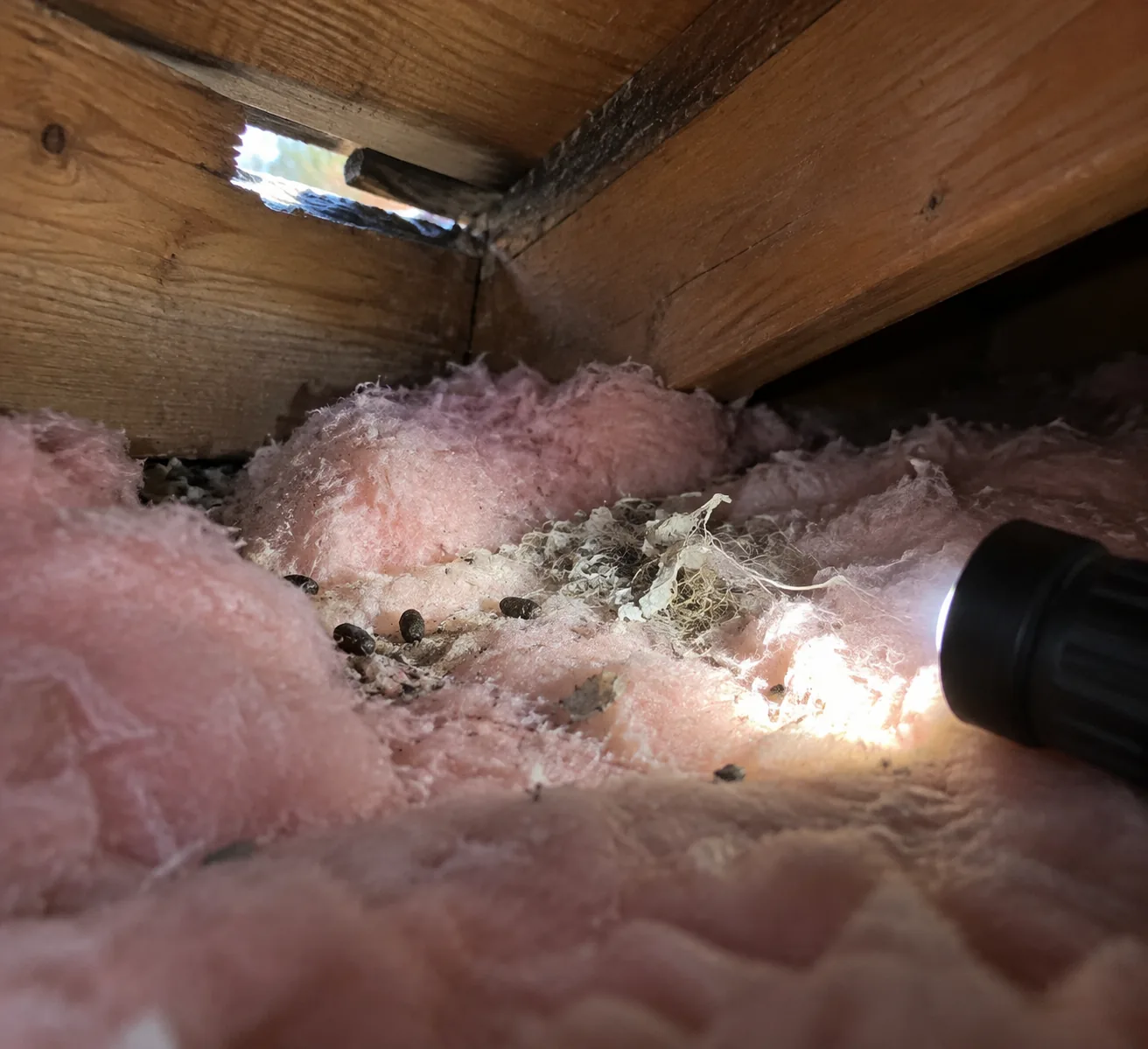
Visible droppings, nesting material, tracks, gnaw marks, or a strong odor can point to past or current animal activity. No single clue proves that an animal is still present or identifies the species. Tell the inspector what you have heard or seen and where it occurred, rather than disturbing the area to investigate.
Insulation and visible damage
Compressed, displaced, stained, or torn insulation may deserve a closer look, especially if it appears near animal waste or a likely access route. A visual review can note accessible signs of damage around ducts, wiring, roof framing, or stored materials. It is not a substitute for an electrician, HVAC professional, roofer, or other specialist when a system needs technical evaluation.
Likely access points
Gaps or damage near roof edges, vents, soffits, and other openings may help explain how wildlife reached an attic. A service assessment can flag visible access clues and discuss whether exclusion or repair should be considered. Concealed spaces and areas that are unsafe or inaccessible cannot be confirmed by a visual check.
When should you schedule an attic inspection?
Consider a focused inspection when you hear recurring scratching, find droppings or nesting material, notice a persistent animal-related odor, see insulation disturbed, or spot damage near roof vents or eaves. These clues do not confirm an active animal or identify a species on their own, but they are good reasons to seek a safe assessment.
- Scratching or movement: Note the time of day and the area where sounds seem to come from.
- Droppings or nesting debris: Keep people and pets away from the material and do not sweep or vacuum it.
- Odor or staining: Share where the smell or stain is strongest; the source may not be visible from the living space.
- Disturbed insulation or gnaw marks: Avoid pulling materials aside to search for an animal or opening.
The CDC advises people not to sweep or vacuum rodent urine, droppings, or nesting materials because doing so can put contaminated particles into the air. Read the CDC’s rodent cleanup guidance and leave suspected contamination undisturbed while you decide how to proceed.
What happens during an attic inspection?
A useful visit starts with your observations, then focuses on safe, accessible areas and visible evidence. The provider should explain what was observed, what remains uncertain, and which next steps may fit. Before scheduling, ask what the visit includes, what areas can be accessed, and what documentation, if any, you will receive.
Before the visit
Share the signs you noticed, when they began, and whether anyone has seen an animal enter or leave. If you have photos taken from a safe place, keep them available. Do not climb into an unsafe attic or move insulation, droppings, or nesting material to make the area easier to inspect.
During the assessment
Access depends on the home, the condition of the attic, and the safety of the route. A responsible assessment should stay within safe limits and focus on the visible areas relevant to your concern. If something cannot be reached or verified without opening a surface or using specialized equipment, it should be described as unknown rather than treated as a confirmed finding.
Reviewing next steps
Ask for a plain-language explanation of the observations and the reason for any suggested work. Orange County Attic CleanUp & Wildlife Control advertises a free inspection and quote. That does not make cleanup, animal removal, decontamination, exclusion, insulation work, or repairs free; those services should have a separate scope and price for you to review.
What can happen after the findings?
The right next step depends on what is visible and what can be safely confirmed. An inspection is a starting point for decisions, not a guarantee that every concealed condition has been found. Findings may lead to a discussion about humane animal removal, cleanup or decontamination, entry-point repairs, insulation restoration, or a referral to a qualified trade professional.
| Visible clue | Possible next step to discuss |
|---|---|
| Signs of current wildlife activity | Ask about humane removal or control options and how to reduce access. |
| Droppings, nesting material, or damaged insulation | Discuss safe cleanup, decontamination, and whether affected insulation needs attention. |
| A visible opening or damaged roofline area | Ask whether exclusion or a repair assessment is appropriate. |
| Suspected wiring, duct, or structural damage | Ask which licensed or qualified specialist should evaluate the system. |
If you hear active animal movement or see waste, avoid reaching into the attic or trying to trap an animal yourself. Call (877) 395-6877 to ask whether the company’s free inspection and quote fit the situation.

How is an attic service assessment different from a home inspection?
A wildlife or restoration assessment focuses on visible signs connected to animal activity, contamination, access points, and attic cleanup or repair needs. A real-estate home inspection addresses a broader set of home components under the inspector’s agreed scope. InterNACHI’s home-inspection course overview describes coverage across major home systems, including the attic, insulation, and ventilation.
| Type of review | Main purpose | What it does not establish by itself |
|---|---|---|
| Wildlife or restoration assessment | Review visible animal-related signs and discuss cleanup or restoration options. | A whole-home condition report, species identification in every case, or a lab result. |
| Buyer or seller home inspection | Assess visible home components and systems within the inspector’s standards and agreement. | That every concealed defect or future problem has been found. |
| Specialized testing or trade evaluation | Answer a defined question about materials or a system using the appropriate expertise or test. | A result outside the specific scope of that professional’s work. |
If you are buying or selling a home, arranging a formal home inspection, or need mold, asbestos, electrical, HVAC, or structural testing, ask the relevant licensed or qualified professional. A wildlife cleanup assessment should not be presented as a substitute.
What affects attic cleanup and repair costs?
The Orange County Attic CleanUp & Wildlife Control homepage advertises a free inspection and quote, but it does not publish a price list for cleanup or restoration. The cost of work depends on the property and the confirmed scope. A quote should distinguish inspection from paid work and explain which tasks are included before you approve the project.
| Cost factor | Why it can change the scope |
|---|---|
| Attic size and safe access | More area or difficult access can affect assessment, labor, and material handling. |
| Amount and type of debris | Cleanup needs differ between loose debris and waste or nesting material that may have contaminated insulation. |
| Insulation condition | Some areas may need no work, while damaged or contaminated insulation may require removal or replacement. |
| Exclusion and repair needs | Closing access points or addressing visible damage can add separate work to a cleanup project. |
Ask for the proposed work, exclusions, and price before authorizing paid services. Avoid relying on national inspection-cost articles as a quote for local cleanup or restoration, because they may describe a different service.
Where does Orange County Attic CleanUp & Wildlife Control serve?
The company’s homepage lists service across Orange County, including Anaheim, Santa Ana, Irvine, Huntington Beach, Orange, Fullerton, Costa Mesa, and other communities. Check the homepage service-area list or call before scheduling to confirm coverage for your address. The site also lists a free inspection and quote for homeowners who want to discuss visible attic concerns.
Key takeaways
- A wildlife-focused attic inspection looks for visible signs and accessible restoration concerns, not every hidden condition.
- Do not disturb suspected rodent waste or nesting material; CDC guidance warns against sweeping or vacuuming it.
- Ask what the inspection includes, what cannot be verified, and what documentation you will receive.
- A free inspection and quote is separate from the cost of any removal, cleanup, exclusion, insulation, or repair work.
Attic inspection questions homeowners ask
What does an attic inspection look for?
A wildlife-focused attic inspection looks for visible signs such as droppings, nesting material, animal activity, disturbed insulation, likely entry points, and related damage. The exact areas that can be checked depend on safe access and the service scope. A visual assessment does not confirm concealed conditions or replace specialized testing.
Is an attic inspection free in Orange County?
Orange County Attic CleanUp & Wildlife Control currently advertises a free inspection and quote on its homepage. Ask when scheduling what the visit covers and whether any follow-up work is separate. Cleanup, decontamination, exclusion, insulation restoration, and repairs may have their own quoted costs.
How much does attic cleanup or repair cost?
No single price applies to every attic. Scope can change with attic size, safe access, debris or contamination, insulation condition, and any exclusion or repair work. Orange County Attic CleanUp & Wildlife Control advertises a free inspection and quote, so ask for the specific work and price before approving paid services.
Does an attic inspection include mold or asbestos testing?
A visual wildlife or restoration assessment should not be assumed to include mold, asbestos, or laboratory testing. If you see suspected mold or an unknown material, do not disturb it. Ask whether a specialist or specific test is needed, and use a qualified professional for that scope.
Should I enter the attic myself if I hear an animal?
No. Do not enter an unsafe attic or try to corner, handle, or trap a wild animal. Avoid touching droppings, urine, or nesting material. The CDC says not to sweep or vacuum rodent waste; use its cleanup guidance and contact a qualified service provider to discuss safe next steps.
Can an inspection find where animals are getting in?
A visual review may identify accessible openings or damage around vents, eaves, soffits, or other roofline areas. Some routes may be hidden or unreachable without additional work. Ask the provider to distinguish confirmed visible openings from suspected access points, and whether a separate exclusion or repair estimate is needed.
Is this the same as a buyer’s home inspection?
No. A wildlife or restoration assessment centers on animal activity and attic cleanup or repair concerns. A buyer’s home inspection is broader and follows an agreed home-inspection scope. If you need a real-estate inspection, hire a home inspector; if you need specialized testing, ask the appropriate qualified professional.
What should I do before scheduling?
Write down when you hear sounds, where you notice odors or stains, and what signs you can see from a safe location. Keep children and pets away from suspected waste, and do not move insulation or nesting material. Ask what the visit includes, what access is needed, and how any work will be quoted.
Request a free attic inspection and quote
If you have heard scratching, found droppings, or noticed damaged insulation in your Orange County home, start by describing what you observed and where. Orange County Attic CleanUp & Wildlife Control lists humane animal removal, attic decontamination, insulation restoration, and a free inspection and quote. Call (877) 395-6877 or visit the company homepage to discuss the next step.
What does an attic inspection look for?
A wildlife-focused attic inspection looks for visible signs such as droppings, nesting material, animal activity, disturbed insulation, likely entry points, and related damage. The exact areas that can be checked depend on safe access and the service scope. A visual assessment does not confirm concealed conditions or replace specialized testing.
Is an attic inspection free in Orange County?
Orange County Attic CleanUp & Wildlife Control currently advertises a free inspection and quote on its homepage. Ask when scheduling what the visit covers and whether any follow-up work is separate. Cleanup, decontamination, exclusion, insulation restoration, and repairs may have their own quoted costs.
How much does attic cleanup or repair cost?
No single price applies to every attic. Scope can change with attic size, safe access, debris or contamination, insulation condition, and any exclusion or repair work. Orange County Attic CleanUp & Wildlife Control advertises a free inspection and quote, so ask for the specific work and price before approving paid services.
Does an attic inspection include mold or asbestos testing?
A visual wildlife or restoration assessment should not be assumed to include mold, asbestos, or laboratory testing. If you see suspected mold or an unknown material, do not disturb it. Ask whether a specialist or specific test is needed, and use a qualified professional for that scope.
Should I enter the attic myself if I hear an animal?
No. Do not enter an unsafe attic or try to corner, handle, or trap a wild animal. Avoid touching droppings, urine, or nesting material. The CDC says not to sweep or vacuum rodent waste; use its cleanup guidance and contact a qualified service provider to discuss safe next steps.
Can an inspection find where animals are getting in?
A visual review may identify accessible openings or damage around vents, eaves, soffits, or other roofline areas. Some routes may be hidden or unreachable without additional work. Ask the provider to distinguish confirmed visible openings from suspected access points, and whether a separate exclusion or repair estimate is needed.
Is this the same as a buyer’s home inspection?
No. A wildlife or restoration assessment centers on animal activity and attic cleanup or repair concerns. A buyer’s home inspection is broader and follows an agreed home-inspection scope. If you need a real-estate inspection, hire a home inspector; if you need specialized testing, ask the appropriate qualified professional.
What should I do before scheduling?
Write down when you hear sounds, where you notice odors or stains, and what signs you can see from a safe location. Keep children and pets away from suspected waste, and do not move insulation or nesting material. Ask what the visit includes, what access is needed, and how any work will be quoted.
Have Questions About Your Attic in Orange County?
Our specialists inspect your attic, identify moisture or rodent entry points, and give you an upfront, no-pressure repair plan.