Attic Insulation Installation in Orange County After Wildlife or Rodent Damage
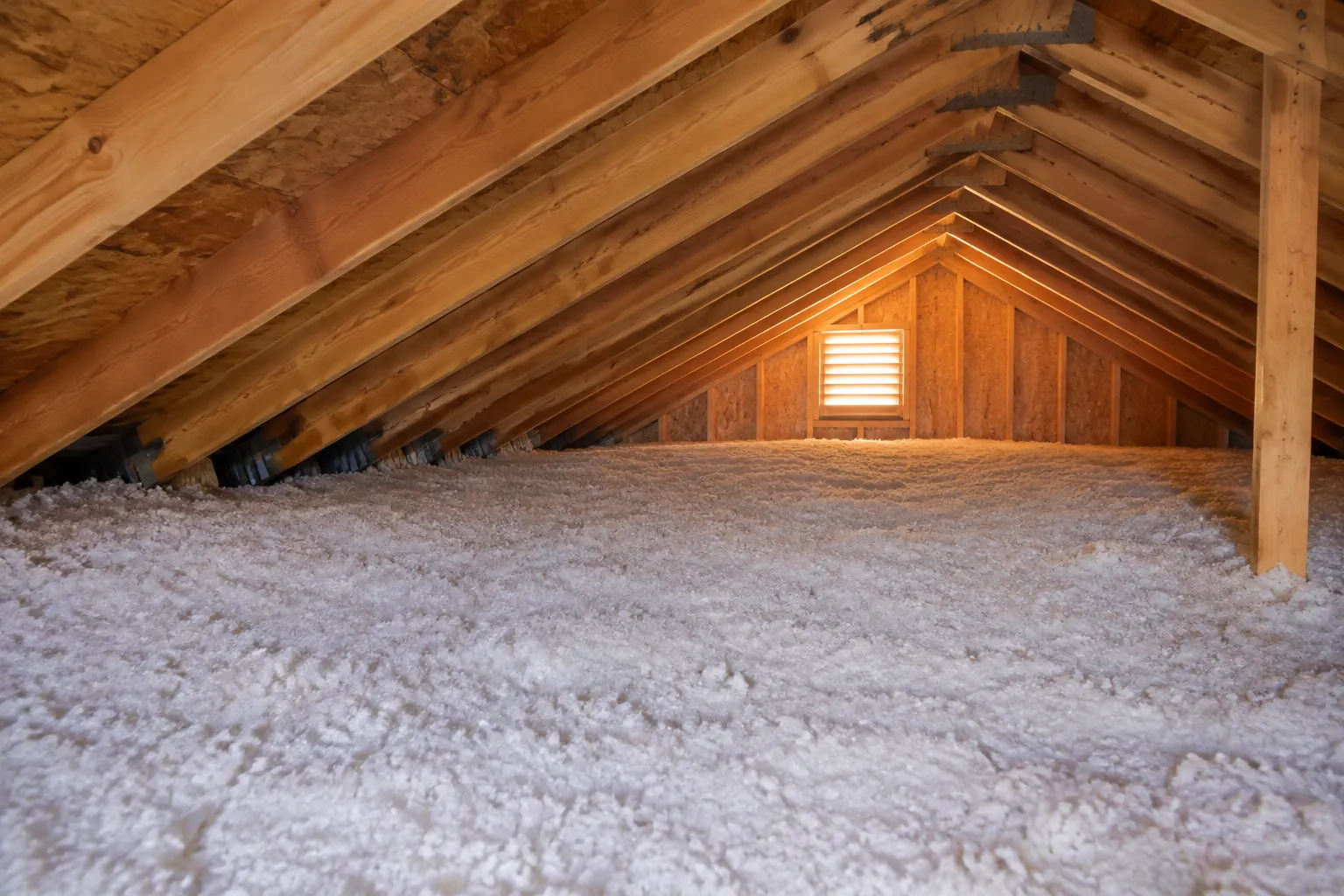
New insulation only works if the attic underneath it is clean, sealed, and dry. That's the part most installation guides skip. If raccoons, rats, squirrels, or bats have been living above your ceiling, simply adding a fresh layer on top can trap droppings, odor, and moisture right where they started.
This guide explains how attic insulation installation in Orange County should work when your attic has been damaged by wildlife or rodents: what gets inspected, when old material needs to come out, the right order of work, and what to look for in a quote. At Orange County Attic Cleanup, insulation installation is the final step of a complete attic restoration, not a standalone shortcut.
Ready to find out what your attic actually needs? Request your free attic inspection or call (877) 395-6877.
What Does Professional Attic Insulation Installation Include?
Professional attic insulation installation should start with an inspection of existing material, moisture, air leaks, ventilation, and pest damage. If insulation is contaminated or damaged, the source is addressed first, affected material is removed when needed, the attic is cleaned and entry points are sealed, and then new insulation is installed.
A good installation is a scope of work, not just a product. Depending on what the inspection finds, the job may be a simple top-up or a full restoration.
Installation Only, Insulation Upgrade, or Removal and Replacement
- Installation only: The attic is clean and dry, but has little or no insulation. New material is added to the target level.
- Insulation upgrade (top-up): Existing insulation is in good condition but too thin. New insulation goes over it after any air leaks are addressed.
- Removal and replacement: Existing insulation is contaminated, wet, compressed, or nested in. Old material comes out, the attic is cleaned and sanitized, and fresh insulation is installed.
What an Inspection Checks Before Work Is Recommended
Before recommending any scope, our technicians look at the attic as a whole system. A typical inspection checks:
- Insulation depth, coverage gaps, and signs of settling or compression
- Droppings, urine staining, nesting material, and odor
- Active wildlife, or signs that animals are still entering
- Gaps, vents, and rooflines that animals could use as entry points
- Moisture, water stains, and damaged wood
- Chewed wiring, damaged ductwork, and recessed light fixtures
- Attic ventilation and access
When Should Old Attic Insulation Be Replaced Instead of Topped Up?
Old attic insulation should be replaced, not topped up, when it is contaminated by droppings or urine, wet or moldy, heavily compressed, or full of nesting debris. Adding new insulation over damaged material hides the problem instead of fixing it. A professional assessment confirms which areas need removal and which can stay.
Not every attic needs full removal. The decision depends on what is actually in your attic, and this simple table is a good starting point.
| What you see in the attic | Likely recommendation |
|---|---|
| Clean, dry insulation that is just too thin | Top up after air sealing |
| Bare spots or uneven coverage, no contamination | Install new insulation in gaps and level coverage |
| Droppings, urine stains, or strong animal odor | Remove affected insulation, sanitize, then replace |
| Nests, tunnels, or flattened trails through insulation | Remove animal and affected material, seal entry points, then replace |
| Wet, stained, or moldy insulation | Fix the moisture source first, then remove and replace |
| Gray-brown, pebble-like vermiculite | Stop. Do not disturb. Have it tested by a qualified specialist |
Droppings, Urine, Nesting Debris, and Damaged Material
Wildlife and rodents don't just pass through insulation. They tunnel into it, nest in it, and use it as a toilet. Once insulation is soaked or packed with debris, it loses much of its ability to slow heat flow, and it can hold odors that drift into living spaces through ceiling openings and ductwork. In these cases, removal and replacement is usually the only real fix.
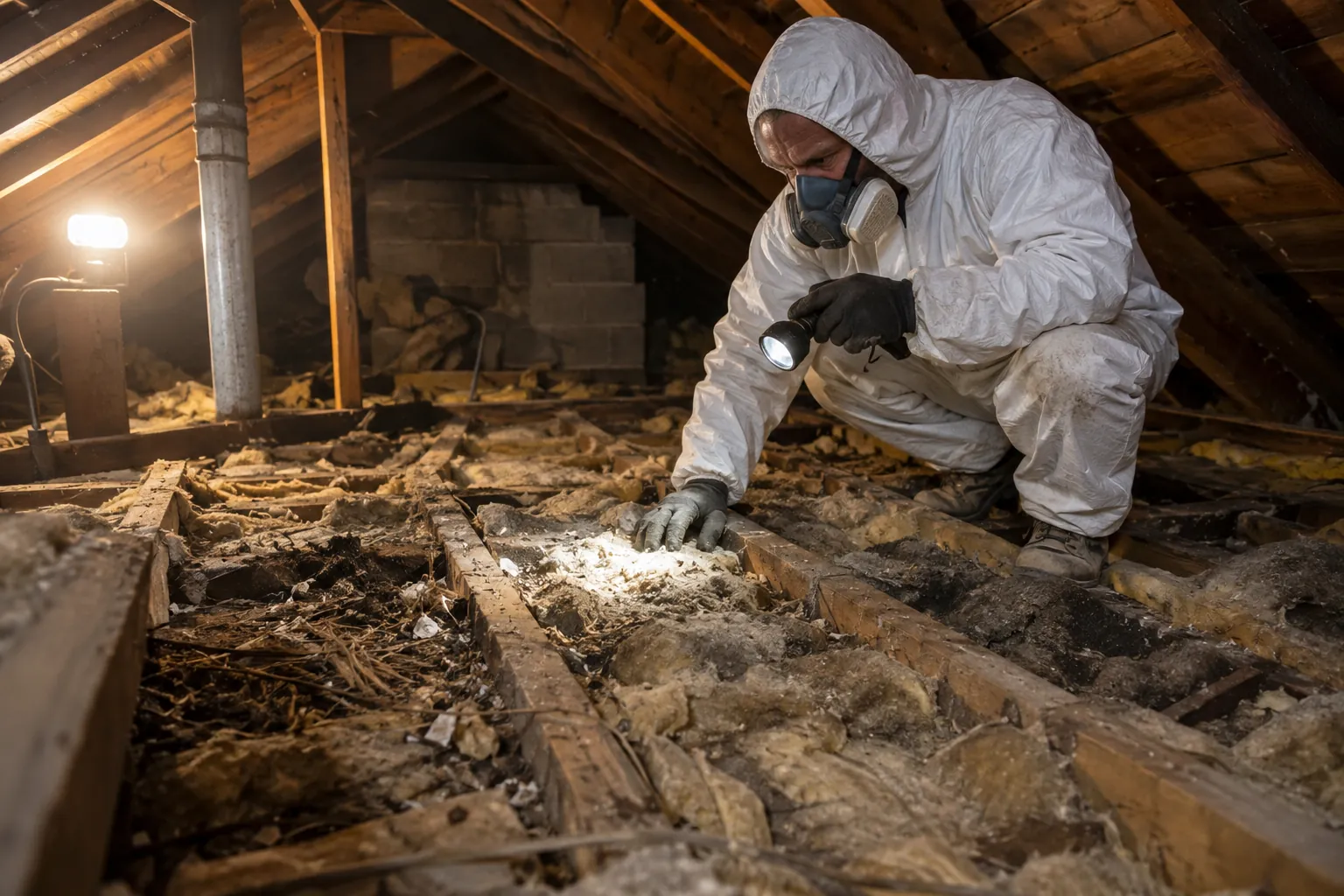
Moisture, Odor, Settling, and Uncovered Areas
Moisture from roof leaks or vents that exhaust into the attic can flatten insulation and encourage mold. ENERGY STAR advises homeowners to bring in a professional before adding attic insulation if they find wet insulation, moldy or rotted framing, or little to no ventilation. Settling and gaps along the attic edges are also common and are worth correcting during any installation.
When to Stop and Refer a Suspected Hazardous Material
Some older homes contain vermiculite insulation, which may contain asbestos. ENERGY STAR recommends not disturbing vermiculite until it has been tested by an approved lab. If our team suspects vermiculite or another hazardous material, the right move is to pause and refer testing to a qualified specialist before any removal or installation.
The Right Work Sequence for Attic Insulation Installation After Wildlife Damage
The order of work matters. Installing insulation before the animal is gone or the entry points are sealed is how homeowners end up paying twice. Every restoration job at Orange County Attic Cleanup follows the same sequence.
- Remove the animal and identify access points. Our licensed technicians humanely remove raccoons, rats, squirrels, bats, and other wildlife, and locate the gaps and openings they used to get in.
- Remove affected insulation when the assessment calls for it. Contaminated, wet, or nested-in insulation is extracted and bagged. Material that is still clean and in good condition may be left in place if the inspection supports it.
- Clean, sanitize, and seal entry points. Surfaces are decontaminated with an antimicrobial treatment to neutralize scent markers and pathogens. Then entry points are sealed so wildlife can't walk back into a freshly restored attic.
- Install new insulation and document the completed scope. Fresh insulation is installed to current Title 24 efficiency standards, as stated on our attic restoration services page. The finished work is checked for even coverage before the job is closed out.
Dealing with droppings or damaged insulation right now? Book a free inspection and upfront quote so the job is done in the right order.
Which Insulation Options Fit an Orange County Attic?
The right attic insulation depends on the attic's layout, access, existing material, and ventilation. Loose-fill (blown-in) insulation is often used to cover irregular spaces evenly, while batts can suit open, accessible joist bays. A technician should recommend a material after inspecting the attic, not before.
Blown-In, Batt, or Other Materials
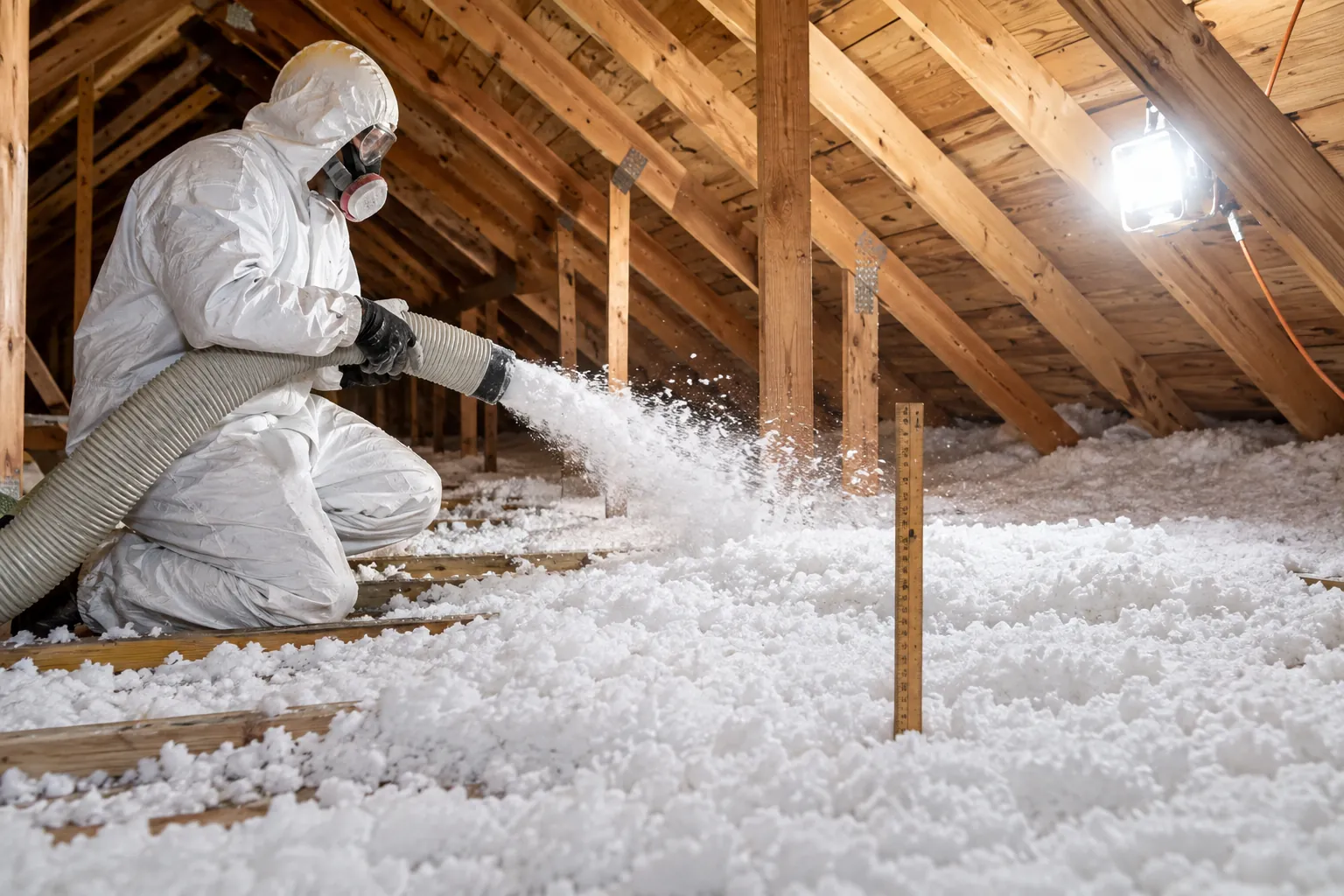
- Blown-in (loose-fill): Fills around wiring, framing, and odd corners with fewer gaps. Requires a blowing machine, which is one reason it is commonly installed by professionals.
- Batts or rolls: Pre-cut sections laid between joists. Best in open, regular spaces. When added over existing insulation, new batts should be unfaced.
R-Value, Ventilation, Air Sealing, and Home-Specific Requirements
R-value measures how well insulation resists heat flow, and the target level depends on your home and current requirements. Insulation also has to work with the rest of the attic. Soffit vents need to stay clear, which is why baffles are often installed at the eaves, and ENERGY STAR recommends air sealing before adding insulation. Recessed lights that are not rated for insulation contact need clearance or barriers. For a deeper look at fit and clearances, the Insulation Institute's attic installation guidance is a useful reference.
What Affects Attic Insulation Installation Cost in Orange County?
Attic insulation installation cost in Orange County depends mainly on attic size, access, the material used, the condition of existing insulation, and whether removal, cleanup, sanitizing, or entry-point sealing is needed. Because those factors vary so much between homes, an accurate price comes from an on-site inspection rather than a flat rate.
| Cost factor | Why it changes the price |
|---|---|
| Attic square footage | More area means more material and labor |
| Access and clearance | Tight or low attics take longer to work in |
| Insulation material and target depth | Different materials and levels have different costs |
| Removal of old insulation | Extraction, bagging, and disposal add labor |
| Contamination level | Heavy droppings or odor require more sanitizing |
| Entry-point sealing and repairs | Exclusion work and damaged wiring or ducts add to the scope |
We offer a free inspection and upfront quote so you know the full scope before any work begins.
What Happens During an Attic Insulation Installation Appointment?
Before Work: Inspection and Confirmed Scope
A technician inspects the attic, explains what was found, and confirms whether the job is a top-up, a gap fill, or a full removal and replacement. Same-day inspections are available, according to our contact page.
During Work: Removal, Cleanup, and Installation
Living spaces near the attic access are protected, affected material is removed if needed, the attic is sanitized and sealed, and new insulation is installed.
After Work: Coverage Check and Walkthrough
The finished attic is checked for even coverage and clear vents, the work area is cleaned up, and the homeowner gets a summary of what was done.
How to Compare Attic Insulation Installation Quotes
Questions to Ask Before Approving Work
- Has the attic been inspected in person, or is this a guess based on square footage?
- Is the old insulation being removed, or will new material go on top?
- If animals were present, is removal, sanitizing, and entry-point sealing included?
- What material is being installed, and to what depth or R-value?
- Will vents, baffles, and recessed lights be protected?
- Is the company licensed, bonded, and insured?
What Should Be Included in a Written Estimate
- Inspection findings in plain language
- Removal and disposal scope, if any
- Cleaning and sanitizing scope
- Entry-point sealing and any repairs
- Insulation type, coverage area, and target level
- Warranty terms
Key Takeaways
- Attic insulation installation should always start with an inspection of the existing material, moisture, ventilation, and pest damage.
- Contaminated, wet, or nested-in insulation should be removed and replaced, not covered over.
- After wildlife damage, the right order is: remove the animal, remove affected material, sanitize, seal entry points, then install.
- Cost depends on attic size, access, material, removal, contamination, and sealing, so a real quote needs a site visit.
- Compare quotes by scope, not just price.
Request an Orange County Attic Inspection
Good attic insulation installation in Orange County isn't about pouring more material into the attic. It's about fixing the real problem first, then installing insulation on a clean, sealed, dry surface so it can do its job. Orange County Attic Cleanup brings 20+ years of local attic restoration experience and licensed, bonded, and insured technicians to every job, from humane wildlife removal through decontamination, sealing, and fresh insulation.
Get your free attic inspection and upfront quote, or call us at (877) 395-6877. We're available Monday to Saturday, 7am to 7pm, with same-day inspections available.
Do I need to remove old insulation before installing new?
Not always. If your existing insulation is clean, dry, and simply too thin, new insulation can usually go on top after air leaks are addressed. If it is contaminated by droppings or urine, wet, moldy, or heavily compressed, it should be removed first. An inspection tells you which situation you're in and whether only part of the attic needs removal.
Can new insulation go over rodent-contaminated material?
It shouldn't. Covering contaminated insulation traps droppings, urine, and odor under the new layer, and the old material can keep affecting air quality and attracting pests. The better approach is to remove the animals, extract the affected insulation, sanitize the attic, seal entry points, and then install fresh insulation on a clean surface.
How long does attic insulation installation take?
A straightforward top-up in an accessible attic is often a short job, while full removal, decontamination, sealing, and reinstallation takes longer. ENERGY STAR estimates one to two days for a contractor-installed attic insulation project. The actual timeline for your home depends on attic size, access, and how much cleanup is needed, which is confirmed during the inspection.
Does attic insulation installation include air sealing?
It should be part of the conversation. ENERGY STAR recommends air sealing the attic before adding insulation, because insulation alone does not stop air leaking through gaps around wiring, plumbing, and light fixtures. Ask any installer whether air sealing is included in their quote.
Why install new insulation after wildlife removal?
Wildlife often flattens, tunnels through, and soils attic insulation, which reduces its ability to keep your home comfortable and can leave lingering odor. Once the animal is removed and the attic is sanitized and sealed, fresh insulation restores coverage and gives you a clean starting point instead of damaged material that keeps causing problems.
Is blown-in insulation better than batts for an attic?
Neither is better in every attic. Blown-in insulation fills irregular spaces and works around wiring and framing with fewer gaps, which is why it is popular for existing attics. Batts can work well in open, regular joist bays. The best choice depends on your attic's layout, access, and existing material, and should be recommended after an inspection.
Which areas do you serve for attic insulation installation?
We serve homes across Orange County, including Anaheim, Santa Ana, Irvine, Huntington Beach, Garden Grove, Orange, Fullerton, Costa Mesa, Mission Viejo, Newport Beach, Tustin, Yorba Linda, San Clemente, Laguna Niguel, and many surrounding communities. If you're unsure whether we cover your neighborhood, call (877) 395-6877 and ask.
Have Questions About Your Attic in Orange County?
Our specialists inspect your attic, identify moisture or rodent entry points, and give you an upfront, no-pressure repair plan.