Suspect Asbestos in Your Attic Insulation? What Orange County Homeowners Should Do
Quick answer
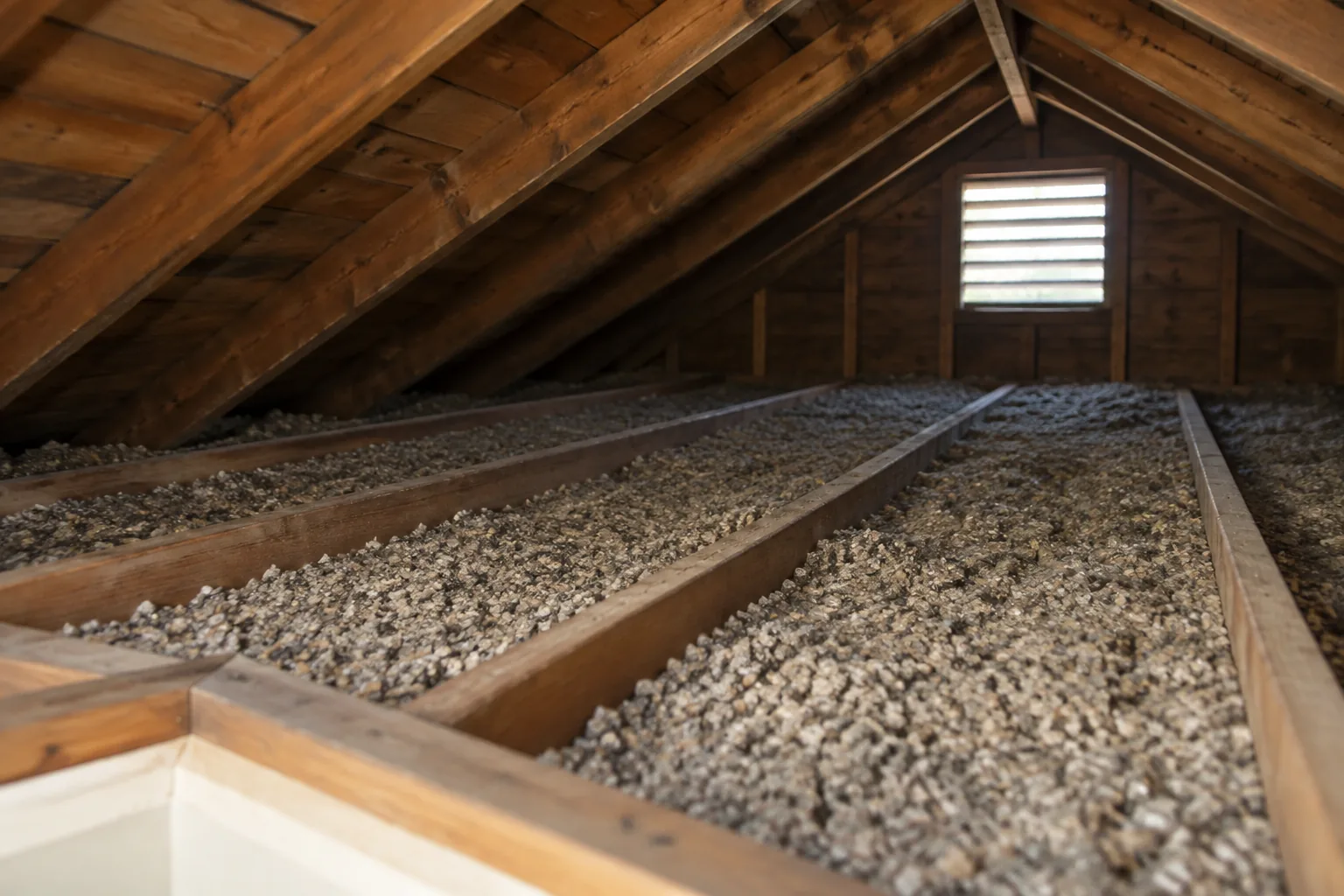
If your attic insulation may be vermiculite, leave it undisturbed. Do not walk on it, move it, vacuum it, or take a sample. The U.S. EPA says vermiculite insulation may be contaminated with asbestos and recommends trained asbestos professionals for any work that could disturb it. Appearance alone cannot confirm asbestos.
Finding pebbly, gray-brown or silver-gold insulation in an older attic can be unsettling, especially if you were planning a remodel, a re-roof, or an attic cleanup. The good news: the safest first step is also the simplest one. Stop, leave the material alone, and get the right professional involved before anyone works in that space.
This guide explains what attic insulation with asbestos might look like, why you should not rely on a visual check, who Orange County homeowners should contact, and what needs to happen before standard attic cleanup and insulation restoration in Orange County can resume.
Important service note:
Orange County Attic Cleanup provides attic cleanup, decontamination, and insulation restoration. Asbestos inspection, testing, and abatement must be handled by appropriately certified asbestos professionals.
What Should I Do If I Suspect Asbestos in My Attic Insulation?
Leave the insulation exactly as it is, keep people and pets out of the attic, and contact a Cal/OSHA Certified Asbestos Consultant (CAC) before any renovation, repair, or cleanup work begins. Asbestos is mainly a risk when fibers become airborne, so avoiding disturbance is the most important thing you can do right now.
Leave Suspected Vermiculite Undisturbed
The EPA's guidance on asbestos-contaminated vermiculite insulation is clear: assume vermiculite may contain asbestos and do not disturb it. EPA also recommends not storing boxes in an attic with vermiculite, not letting children play there, and limiting the number and length of any trips you must make into the space.
Do Not Sweep, Vacuum, Move, or Sample It Yourself
Household vacuums, shop vacs, brooms, and even a careful scoop can push fine fibers into the air and spread them through the home. Pause any contractor work in the attic as well, including HVAC, electrical, solar, roofing, or pest work that could stir up the insulation.
If Material Has Spilled Into Living Space
If insulation has fallen through a ceiling opening, a recessed light, or a damaged attic hatch, limit access to that room, avoid cleaning it up yourself, and seek qualified advice promptly. If you are worried about past exposure, the EPA recommends talking with your doctor.
What Attic Insulation May Raise Concern?
The insulation most closely linked to asbestos in attics is vermiculite. It is a clue worth taking seriously, but it is not proof. Other insulation types can also contain asbestos-related materials, which is why professional assessment matters.
Vermiculite: Pebble-Like, Often Gray-Brown or Silver-Gold
According to the EPA, vermiculite is a naturally occurring mineral that expands when heated into lightweight, fire-resistant granules. As attic insulation, it is a pebble-like, pour-in product that is usually gray-brown or silver-gold. You may see it between ceiling joists or poured into wall cavities. Look only from the hatch, and do not reach in or brush the surface.
Why Zonolite and the Libby Mine Come Up
The EPA reports that a mine near Libby, Montana, supplied over 70 percent of all vermiculite sold in the United States from 1919 to 1990, and that deposit was contaminated with asbestos. Much of that vermiculite insulation was sold under the brand name Zonolite. That history is why the EPA tells homeowners to treat vermiculite insulation as if it contains asbestos.
Other Insulation Types: Why Age or Color Alone Is Not a Test
Older blown-in, loose-fill, and pipe or duct wrap insulation may also need evaluation, depending on what it is made of and when it was installed. Fluffy pink or yellow fiberglass is generally a different material, but mixed layers are common in older homes. Age, color, and texture can point you toward asking questions, not toward an answer.
Can You Tell If Insulation Contains Asbestos by Looking at It?
No. You cannot confirm asbestos by sight, by a photo, or by the age of the house. Asbestos content is determined by a qualified professional who follows proper sampling procedures and sends samples to an accredited lab. Vermiculite is the exception in one sense: the EPA advises treating it as asbestos-contaminated even without testing.
What a Photo Can Show, and What It Cannot
A photo can help a professional decide whether a site visit is needed and what kind of material is present. It cannot show fiber content, percentage, or whether the material is friable (easily crumbled). Treat any online “identify it by picture” checklist as a reason to call for an assessment, not a verdict.
Why Not to Use a DIY Sample Kit
Collecting a sample means disturbing the material, which is the one thing you are trying to avoid. In the South Coast AQMD region, the asbestos survey that supports renovation decisions must be performed by a Cal/OSHA Certified Asbestos Consultant, so a homemade sample generally will not satisfy the requirement anyway.
Not sure whether the material in your attic is even insulation from a past wildlife problem or something else? Talk to our attic team about what you are seeing, and we will tell you plainly whether you need an asbestos professional first.
Does Vermiculite Insulation Always Need to Be Removed?
Not automatically. The EPA's answer on whether to remove vermiculite is that it should be left undisturbed. Removal becomes the conversation when planned work would disturb it, such as a remodel, re-roof, new ductwork, wiring, or an insulation upgrade.
| Situation | Typical next step |
|---|---|
| Vermiculite present, no planned work in the attic | Leave undisturbed, avoid storage and foot traffic, limit attic trips |
| Remodel, re-roof, HVAC, electrical, or solar work planned | Hire a CAC for a survey of the affected materials before work starts |
| Survey confirms asbestos in materials to be disturbed | Use a licensed asbestos abatement contractor for removal and disposal |
| Insulation damaged by wildlife, leaks, or spilled into the home | Restrict access and get a qualified assessment before any cleanup |
| Asbestos work completed and documented | Ordinary attic cleanup and new insulation can be scheduled |
Renovation, Attic Access, Storage, and Contractor Work
The EPA notes that contractor work in an attic can carry fibers into other areas of the house. Tell every trade who may enter the attic what you suspect, and ask them to wait until the material has been assessed.
Who Should Orange County Homeowners Contact?
Orange County falls within the South Coast Air Quality Management District, which regulates asbestos during renovation and demolition under Rule 1403. Three roles matter, and they are not interchangeable.
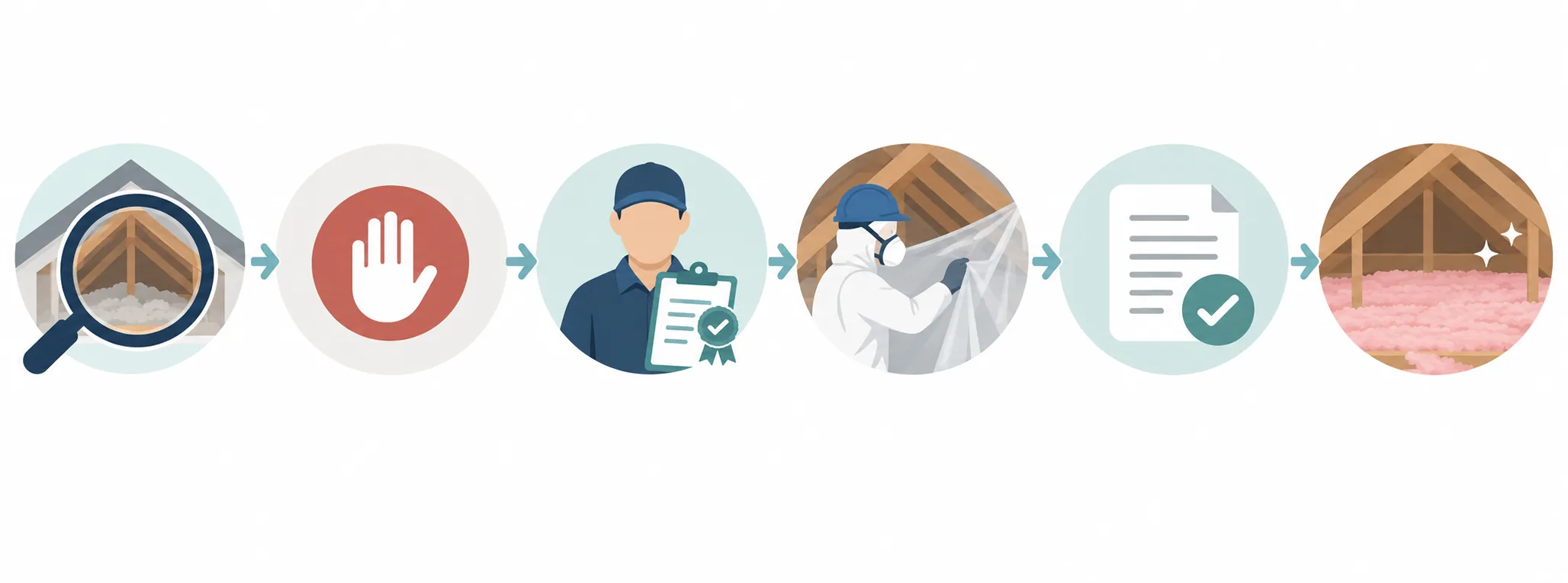
- Cal/OSHA Certified Asbestos Consultant (CAC): According to South Coast AQMD's asbestos survey requirements, only CACs may perform building asbestos surveys and sign asbestos survey reports in California. For renovation, the survey covers the materials the work may disturb.
- Licensed asbestos abatement contractor: The CSLB C-22 Asbestos Abatement classification covers containment, encapsulation, removal, and disposal of asbestos-containing construction materials, and requires registration with Cal/OSHA's Division of Occupational Safety and Health.
- Attic cleanup and insulation provider: Handles standard cleanup, decontamination after wildlife, and new insulation once any asbestos issue has been addressed.
Ask for a Scope-Matched Survey and Written Report
South Coast AQMD says an adequate survey report should list the scope, the inspector's name and qualifications, inspection and lab results, and the consultant's recommendations. Positive materials should be summarized with location, quantity, condition, asbestos percentage, and whether they are friable.
Check Credentials, Written Scope, and Disposal Plan
- Verify the consultant's CAC certification and the abatement contractor's CSLB license and C-22 classification.
- Get a written scope that names the areas and materials included.
- Ask how waste will be contained, transported, and disposed of.
- Ask what completion documentation you will receive when the work is done.
- Confirm insurance coverage in writing.
Keep Assessment Independent From Abatement
The EPA recommends that removal be done by an abatement contractor separate from the company that assessed the insulation, to avoid a conflict of interest. South Coast AQMD also states survey reports should be prepared by professionals without a conflict of interest in the project.
A note on DIY exemptions: South Coast AQMD's owner guidance describes a narrow exemption for owner-occupants of single-unit homes who personally do renovation work, but the agency states it does not recommend homeowners remove asbestos themselves. Waste disposal rules still apply. Rentals, condos, and townhouses do not qualify.
What Changes Before Attic Cleanup or Insulation Replacement Can Resume?
Ordinary attic work resumes only after a qualified professional has addressed the suspect material and you have the paperwork to show it. That is where a regular attic cleanup provider fits in.
Keep the Survey and Work Records
Save the CAC survey report, the lab results, the abatement contractor's scope, and any completion or clearance documents. These records help future buyers, inspectors, and contractors understand what was found and what was done.
Confirm the Work Area Is Ready for Post-Clearance Cleanup
Before scheduling cleanup or new insulation, confirm with your asbestos professional that the attic is released for normal work. Then share the documentation with your attic cleanup provider so the crew knows the history of the space.
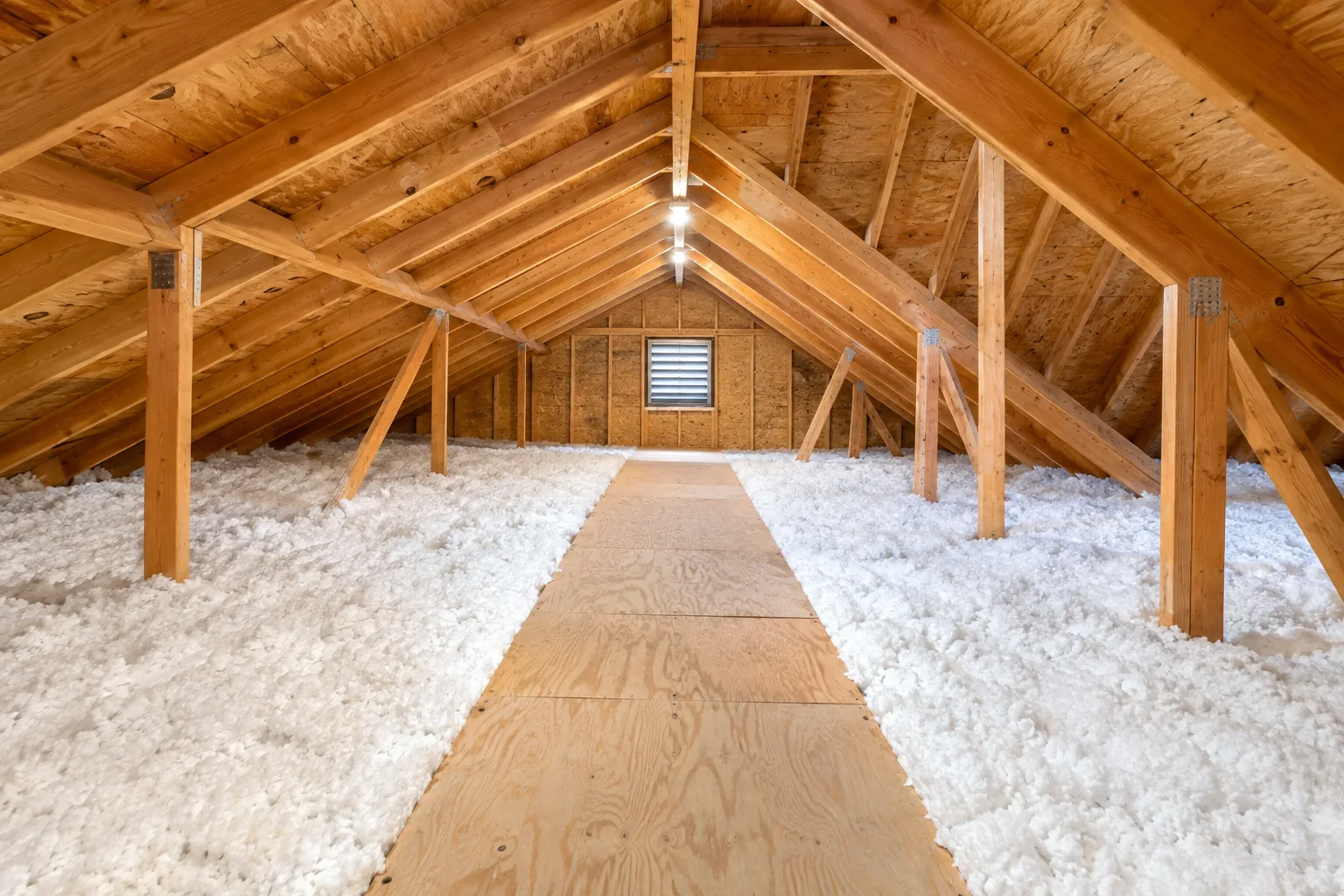
Once your attic has been cleared, Orange County Attic Cleanup can handle the standard work that follows: removing contaminated material left by wildlife, decontaminating surfaces, sealing entry points, and installing fresh insulation to current Title 24 efficiency standards. See how our attic decontamination and insulation restoration services work.
Key Takeaways
- If attic insulation may be vermiculite, leave it undisturbed and keep people out of the attic.
- Looking at insulation cannot confirm asbestos; a CAC and accredited lab process can.
- Removal is not automatic, but planned work that may disturb the material needs a survey first.
- In Orange County, CACs perform asbestos surveys and C-22 licensed contractors perform abatement.
- Standard attic cleanup and new insulation should follow documented asbestos clearance.
Conclusion: Handling Attic Insulation With Asbestos Safely
Suspected attic insulation with asbestos is a reason to pause, not panic. Leave the material alone, bring in a Cal/OSHA Certified Asbestos Consultant if any work could disturb it, and use a licensed abatement contractor if removal is needed. Once the space is cleared and documented, you can restore your attic with confidence.
Ready to restore your attic after asbestos clearance?
Get an upfront quote for cleanup, decontamination, and fresh Title 24 insulation.
Can blown-in insulation contain asbestos?
Some older loose-fill and blown-in insulation can contain asbestos, with vermiculite being the best-known example. Many modern blown-in products, such as fiberglass and cellulose, are different materials, but older attics often have mixed layers. Because you cannot confirm asbestos by appearance, have a Cal/OSHA Certified Asbestos Consultant evaluate older loose-fill insulation before any work that could disturb it.
Is vermiculite the same as asbestos?
No. Vermiculite is a separate naturally occurring mineral. The concern is that most vermiculite insulation sold in the U.S. came from a mine near Libby, Montana, that was contaminated with asbestos. For that reason, the EPA advises homeowners to assume vermiculite insulation may contain asbestos and to avoid disturbing it.
Should I remove vermiculite attic insulation?
Not necessarily. The EPA recommends leaving vermiculite undisturbed. If you plan renovations or other work that would disturb it, hire trained asbestos professionals to assess and, if needed, remove it. The EPA also recommends that the removal company be independent from the company that assessed the insulation.
What should I ask an asbestos professional?
Ask for proof of Cal/OSHA CAC certification for surveys, and CSLB C-22 licensing for abatement. Request a written scope, a survey report with lab results, a waste disposal plan, proof of insurance, and the completion documents you will receive. Also ask whether the assessor is independent from the company doing the removal.
Is it safe to go into an attic with vermiculite insulation?
The EPA says that if you do not enter the attic or disturb the insulation, you are unlikely to be exposed to fibers from it. If you must go in, limit the number and length of trips. Avoid storing items there, and do not let children play in the space.
Can Orange County Attic Cleanup remove asbestos insulation?
Orange County Attic Cleanup focuses on attic cleanup, decontamination, wildlife-related damage, and insulation restoration. Suspected asbestos should be assessed by a Cal/OSHA Certified Asbestos Consultant and removed, if needed, by a licensed asbestos abatement contractor. After that work is documented as complete, our team can help with standard cleanup and new insulation.
Do I need an asbestos survey before re-insulating my attic in Orange County?
If the work could disturb materials that may contain asbestos, South Coast AQMD Rule 1403 generally requires a prior survey of the affected materials by a Cal/OSHA Certified Asbestos Consultant. Exemptions are narrow, so confirm your situation with South Coast AQMD or a CAC before scheduling insulation removal or replacement.
Have Questions About Your Attic in Orange County?
Our specialists inspect your attic, identify moisture or rodent entry points, and give you an upfront, no-pressure repair plan.