Attic Repair Specialists: What Technical Expertise Should Look Like
True attic specialists understand how roofing, framing, insulation, ventilation, and HVAC systems interact to solve complex attic issues.
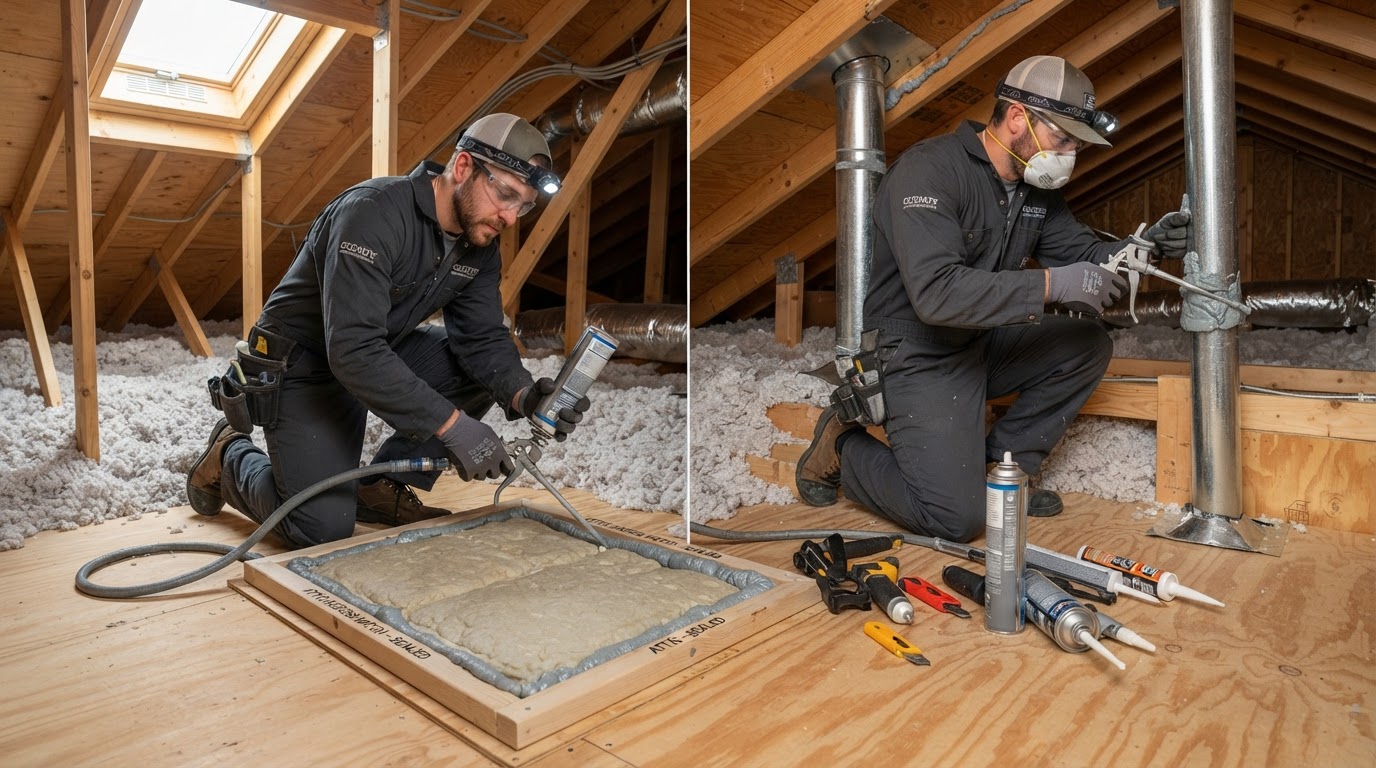
Attic Repair Specialists: What Technical Expertise Should Look Like
Attic Repair Specialists are most useful when the problem crosses more than one system. The attic sits between the roof and the conditioned rooms below, so moisture, air leakage, insulation, ventilation, ducts, wiring, framing, and wildlife damage can interact in ways that are easy to misdiagnose.
A specialist should be able to explain those connections. For example, adding insulation over an air leak may hide the leak without correcting it. Replacing wet insulation without fixing the source of moisture can lead to another failure. Blocking soffit vents with new material can reduce attic airflow. Technical expertise means knowing not only how to perform a task, but also when another condition must be corrected first.
Specialists Should Connect Building Systems
The attic is a meeting point for roofing, framing, insulation, ventilation, ducts, wiring, and air movement from the living space. Technical expertise means understanding how one system can affect another.
For example, a bathroom fan exhausting into the attic can create moisture even when the roof does not leak. A blocked soffit vent can alter airflow. A leaky attic hatch can move conditioned air upward.
Specialists should explain these relationships in plain language so the homeowner understands why the repair sequence matters.
Diagnostic Skill Is More Valuable Than a Long Product List
A company can offer many insulation types, sealants, vents, and cleanup services without necessarily diagnosing the attic well.
Specialists should be able to point to physical evidence: staining, compressed insulation, dirty insulation near air leaks, blocked vents, damaged ducts, or visible gaps.
Products matter only after the problem is understood. Diagnosis keeps the project from becoming a collection of upgrades that may not address the original complaint.
A Practical Start-to-Finish Example
Imagine an attic with thin insulation, darkened material near plumbing penetrations, and a small water stain near a roof transition. The useful sequence is not to add insulation immediately.
First, the stain should be evaluated and the moisture source corrected. Major air leaks can then be sealed, ventilation paths checked, and damaged or contaminated materials addressed. Only after those conditions are stable should insulation be restored or increased.
This sequence protects the new work and gives each task a clear reason.
Should attic air sealing happen before adding insulation?
ENERGY STAR recommends sealing attic air leaks before adding insulation so the insulation can perform more effectively.
Does all old attic insulation need to be removed?
No. Existing insulation can often remain when it is dry, not moldy or foul-smelling, and not contaminated by animal waste or blocking necessary repairs.
Can insulation cover soffit vents?
No. ENERGY STAR warns against covering soffit vents because those openings help maintain attic airflow.
What attic conditions should be corrected before insulation work?
Wet insulation, roof leaks, mold or rot, poor ventilation, some older wiring conditions, and exhaust fans venting into the attic should be evaluated first.
Why does moisture matter in attic repair?
EPA identifies moisture control as the key to controlling mold. Repairing the source of water or excess moisture is essential before damaged materials are replaced.
How can I compare attic repair proposals?
Compare the inspection findings, included and excluded work, repair sequence, ventilation and air-sealing details, insulation scope, and follow-up process rather than price alone.
Have Questions About Your Attic in Orange County?
Our specialists inspect your attic, identify moisture or rodent entry points, and give you an upfront, no-pressure repair plan.