Crawl Space Air Vents: What Orange County Homeowners Should Know
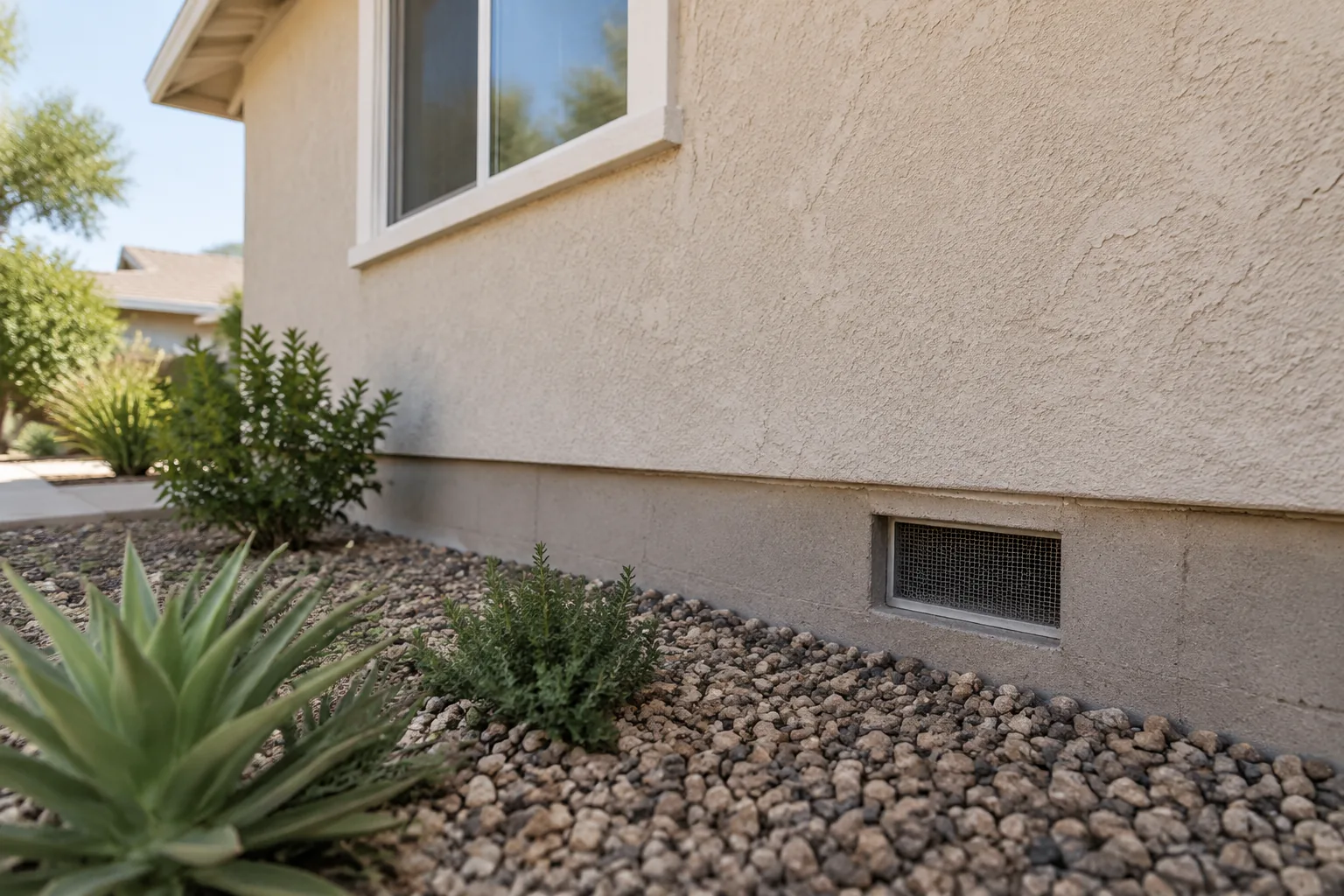
Foundation vents can look like simple openings, but changing one can affect airflow, moisture management, pest access, and code compliance. For Orange County homeowners, the safest starting point is to identify what is already installed and why before adding a screen, cover, or seal.
This guide explains the difference between those options and what to check from outside. The live website for Orange County Attic CleanUp & Wildlife Control confirms wildlife removal and entry-point sealing in Orange County, but it does not confirm crawl-space vent installation or encapsulation. Treat any wildlife-related service question as something to confirm with the team before booking.
The short answer: what are crawl space air vents?
Crawl space air vents are openings in a foundation or exterior wall that provide ventilation to an under-floor space when the home is designed with a vented crawl space. Whether they should remain open, be screened, covered, or sealed depends on the home's complete assembly, moisture conditions, applicable code, and local requirements. A screen is not a moisture-control plan.
If you are seeing signs of animal activity near a vent, do not reach inside or try to trap an animal yourself. First document what is visible from a safe distance, then contact a qualified professional for the issue you have actually observed. Call (877) 395-6877 to describe what you are seeing.
Should crawl space vents stay open or be closed?
There is no safe rule that every crawl space vent should always be open or always be closed. A vented crawl space and a code-compliant unvented crawl space use different approaches. The right choice depends on the existing design, moisture sources, vent condition, and the requirements that apply to the home.
Before changing an existing vent, consider:
- The current crawl-space design: Find out whether the space was designed as vented or as an unvented assembly. Do not convert it based on a seasonal tip or a product label.
- Moisture evidence: Damp soil, standing water, condensation, musty odor, or damaged material can point to a problem that a vent cover alone will not fix.
- Vent condition: A blocked, painted-over, loose, or damaged screen may reduce usable airflow or allow pests through. A professional can assess the opening and the full system.
- Local requirements: Building rules and amendments can vary. Ask the local building department or a qualified building professional before a permanent change.
Do not treat a fitted cover as proof that the crawl space is now sealed correctly. If the space is intended to be unvented, the rest of the moisture-control and building details matter too.
What is the difference between a screen, a cover, and sealing?
A screen protects an opening while allowing some air through. A cover may be designed to preserve airflow, reduce exposure, or temporarily close an opening, depending on its design. Sealing is part of a broader unvented crawl-space approach. These options are not interchangeable, and any added material can change the vent's net free area.
| Option | What it may do | What it does not do by itself |
|---|---|---|
| Open vent | Provides an opening in a vented crawl-space design. | Does not guarantee moisture is controlled or prevent animal entry. |
| Screen or mesh | Can reduce access through the opening while allowing airflow. | Does not correct drainage, ground moisture, or a damaged crawl-space assembly. |
| Vent cover | May protect or close an opening when its use matches the design. | Does not automatically preserve required airflow or make a compliant sealed system. |
| Designed unvented assembly | Uses a code-defined approach to manage the under-floor space without foundation ventilation openings. | Is not simply a vent plugged with foam or a board. |
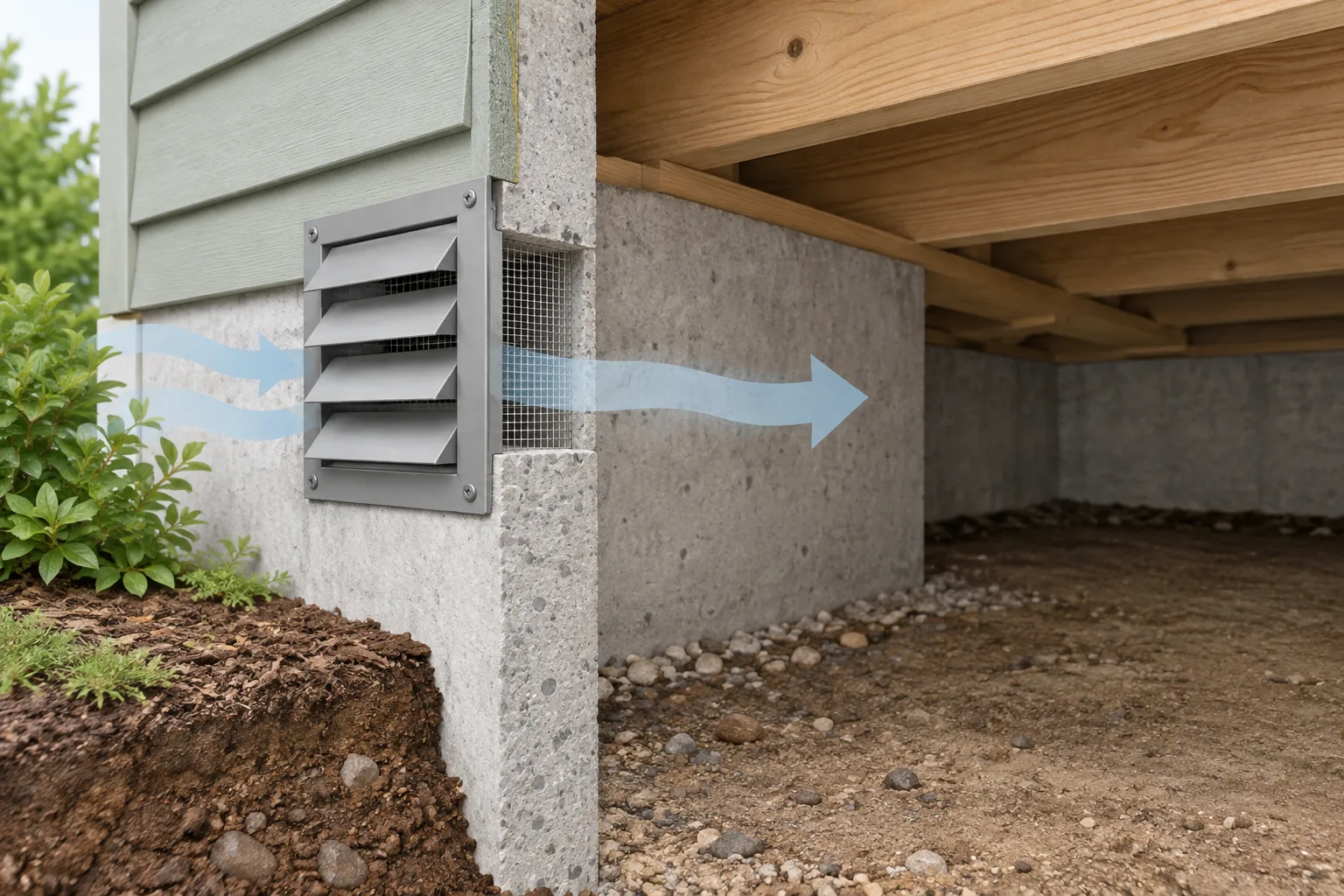
For wildfire hardening, screen size and material can raise a separate safety issue. CAL FIRE's vent guidance notes that ember-resistant modifications may reduce airflow and advises homeowners to check local ventilation requirements and use a licensed contractor. Do not install finer mesh or block vents without checking the effect on the home's ventilation design.
What does California code say about crawl space air vents?
California's 2025 Residential Code, effective January 1, 2026, addresses under-floor spaces in Section R408. It provides a vented path and an alternative unvented path with specific requirements. The section is a starting reference, not a one-size-fits-all retrofit instruction for an existing home.
For the vented path, Section R408.2 covers ventilation openings, their net free area, and placement. The section's baseline ratio is at least 1 square foot of net vent area for each 150 square feet of under-floor area, with an opening near each outside corner. Screens and louvers affect net free area, and the code includes exceptions and conditions that must be read with the full section. Section R408.3 addresses unvented crawl spaces. Review the 2025 California Residential Code, Section R408, and the California Building Standards Commission code publication page for the current edition and errata.
Orange County homeowners should confirm which rules apply to the property with the local building department or a qualified California building professional. Local amendments, the home's age, and the work being proposed can affect the answer. Do not use a general article or a vent-count estimate as permit approval or a design calculation.
What signs near a vent could point to animal entry?
A torn or missing screen, loose cover, gnaw marks, disturbed nesting material, or droppings near an opening can justify a closer professional look. None of these clues alone identifies the animal or proves that it entered through that vent. Observe from outside, avoid contact with waste or wildlife, and leave the opening intact until the cause is assessed.
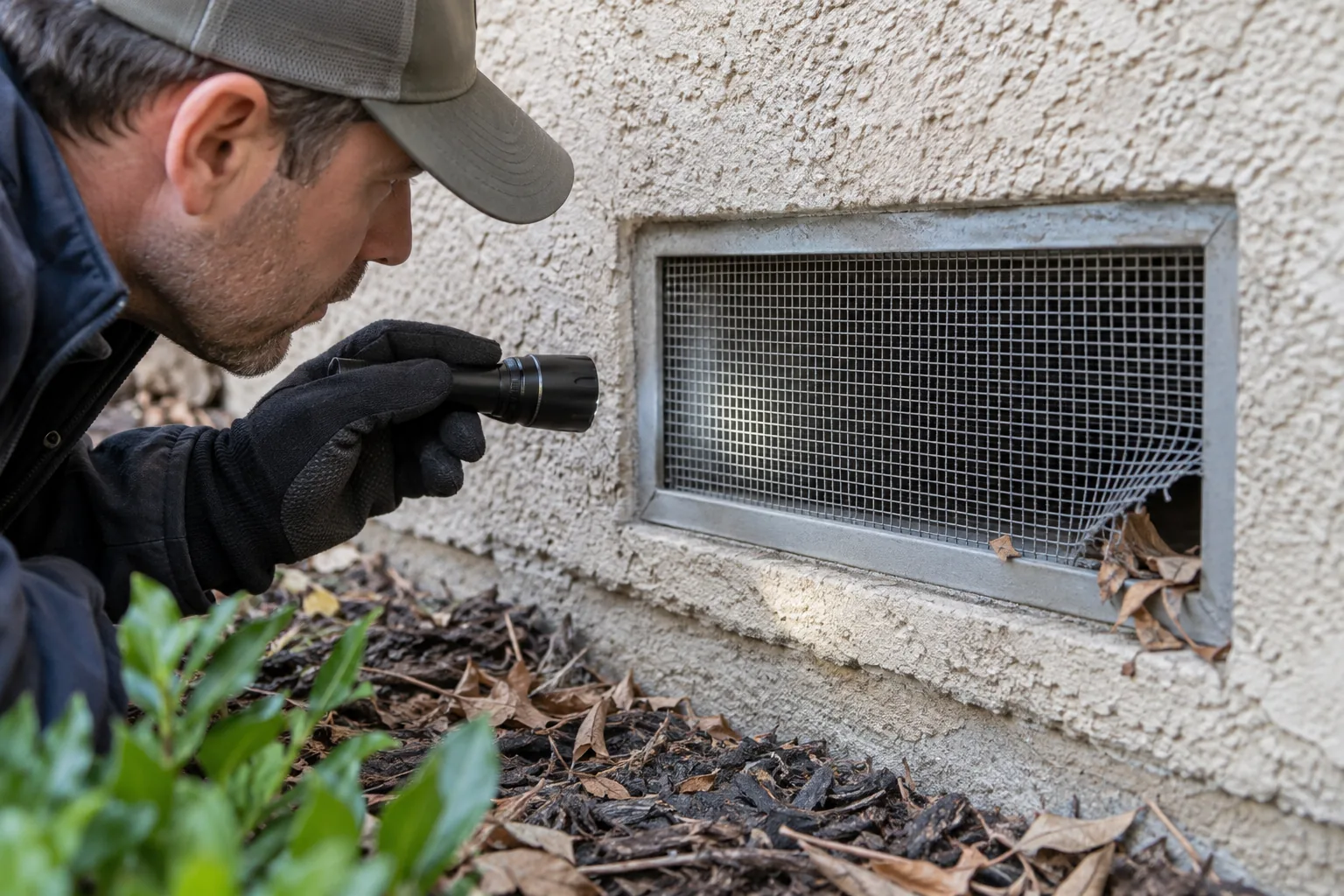
Orange County Attic CleanUp & Wildlife Control's published homepage describes humane wildlife removal and entry-point sealing across Orange County, but it does not list crawl-space vent repair or encapsulation. If you suspect animal entry, contact the team to discuss the signs and confirm whether your crawl-space situation is within its service scope or call (877) 395-6877. For moisture, structural, or code questions, contact a qualified building professional instead.
Safe next steps for Orange County homeowners
- Take a photo of visible damage from a safe distance. Do not reach into the opening, handle droppings, or block the vent while an animal may be inside.
- Note what else you can observe, such as damp ground, standing water, odor, damaged material, or repeated animal sounds. These details help a professional understand the concern.
- Match the next call to the problem: ask a building professional about ventilation, moisture, or code; ask a wildlife specialist about suspected animal access. Confirm the provider's crawl-space scope before scheduling.
That simple split prevents a common mistake: trying to solve a building-science issue with a pest screen, or treating an animal-entry problem as a vent-sizing question.
Key takeaways
- Crawl space air vents are part of a system, so changing one can affect airflow, moisture management, and pest access.
- A screen, cover, and sealed crawl-space assembly serve different purposes.
- California's current residential code includes vented and unvented paths; local applicability should be confirmed before work.
- For visible animal-entry signs, document the evidence safely and confirm that the wildlife provider handles crawl-space cases.
Crawl space air vent FAQs
Can I close crawl space vents in winter?
Do not close vents based on season alone. Some homes rely on a vented under-floor design, while an unvented design has other requirements. A temporary cover can still change airflow or conflict with the intended system. Check the home's design and ask a qualified building professional before closing or sealing an existing vent.
Will a screen stop rodents from entering through a crawl space vent?
An intact, appropriately selected screen can reduce access through an opening, but it is not a guarantee against animal entry. The material, opening size, installation, damage, and applicable ventilation or fire requirements all matter. If the screen is torn or there are signs of wildlife, avoid reaching into the vent and have the condition assessed.
Does a vent cover solve crawl-space moisture?
No. A cover changes the opening, but it does not identify or correct moisture sources such as water entry or ground moisture. Moisture control depends on the complete crawl-space design and site conditions. If you see persistent dampness, standing water, condensation, or musty odor, ask a qualified building professional to evaluate the cause.
Is closing vents the same as crawl-space encapsulation?
No. Closing an opening is only one possible part of a larger unvented approach, and it does not create a complete system by itself. The 2025 California Residential Code treats vented and unvented crawl spaces as different paths with specific requirements. Have a qualified professional review the assembly before any conversion.
Who should inspect a damaged crawl-space vent?
For ventilation, moisture, or code questions, contact a qualified building professional or your local building department. If you see signs of animal activity, contact a wildlife specialist and confirm that crawl-space work is within scope. Avoid touching droppings, disturbing a nest, or reaching into the opening while the issue is being assessed.
Choose the next step based on what you found
Crawl space air vents should not be opened, covered, or sealed by guesswork. Start with the home's existing design, check visible conditions safely, and get code-aware advice before making a permanent change. If the concern is suspected wildlife entry in Orange County, contact Orange County Attic CleanUp & Wildlife Control to discuss the signs and confirm whether the team can help or call (877) 395-6877. For ventilation or moisture work, use a qualified building professional.
Can I close crawl space vents in winter?
Do not close vents based on season alone. Some homes rely on a vented under-floor design, while an unvented design has other requirements. A temporary cover can still change airflow or conflict with the intended system. Check the home's design and ask a qualified building professional before closing or sealing an existing vent.
Will a screen stop rodents from entering through a crawl space vent?
An intact, appropriately selected screen can reduce access through an opening, but it is not a guarantee against animal entry. The material, opening size, installation, damage, and applicable ventilation or fire requirements all matter. If the screen is torn or there are signs of wildlife, avoid reaching into the vent and have the condition assessed.
Does a vent cover solve crawl-space moisture?
No. A cover changes the opening, but it does not identify or correct moisture sources such as water entry or ground moisture. Moisture control depends on the complete crawl-space design and site conditions. If you see persistent dampness, standing water, condensation, or musty odor, ask a qualified building professional to evaluate the cause.
Is closing vents the same as crawl-space encapsulation?
No. Closing an opening is only one possible part of a larger unvented approach, and it does not create a complete system by itself. The 2025 California Residential Code treats vented and unvented crawl spaces as different paths with specific requirements. Have a qualified professional review the assembly before any conversion.
Who should inspect a damaged crawl-space vent?
For ventilation, moisture, or code questions, contact a qualified building professional or your local building department. If you see signs of animal activity, contact a wildlife specialist and confirm that crawl-space work is within scope. Avoid touching droppings, disturbing a nest, or reaching into the opening while the issue is being assessed.
Have Questions About Your Attic in Orange County?
Our specialists inspect your attic, identify moisture or rodent entry points, and give you an upfront, no-pressure repair plan.