Crawl Space Ventilation Vents: When Airflow Helps and When It Doesn't
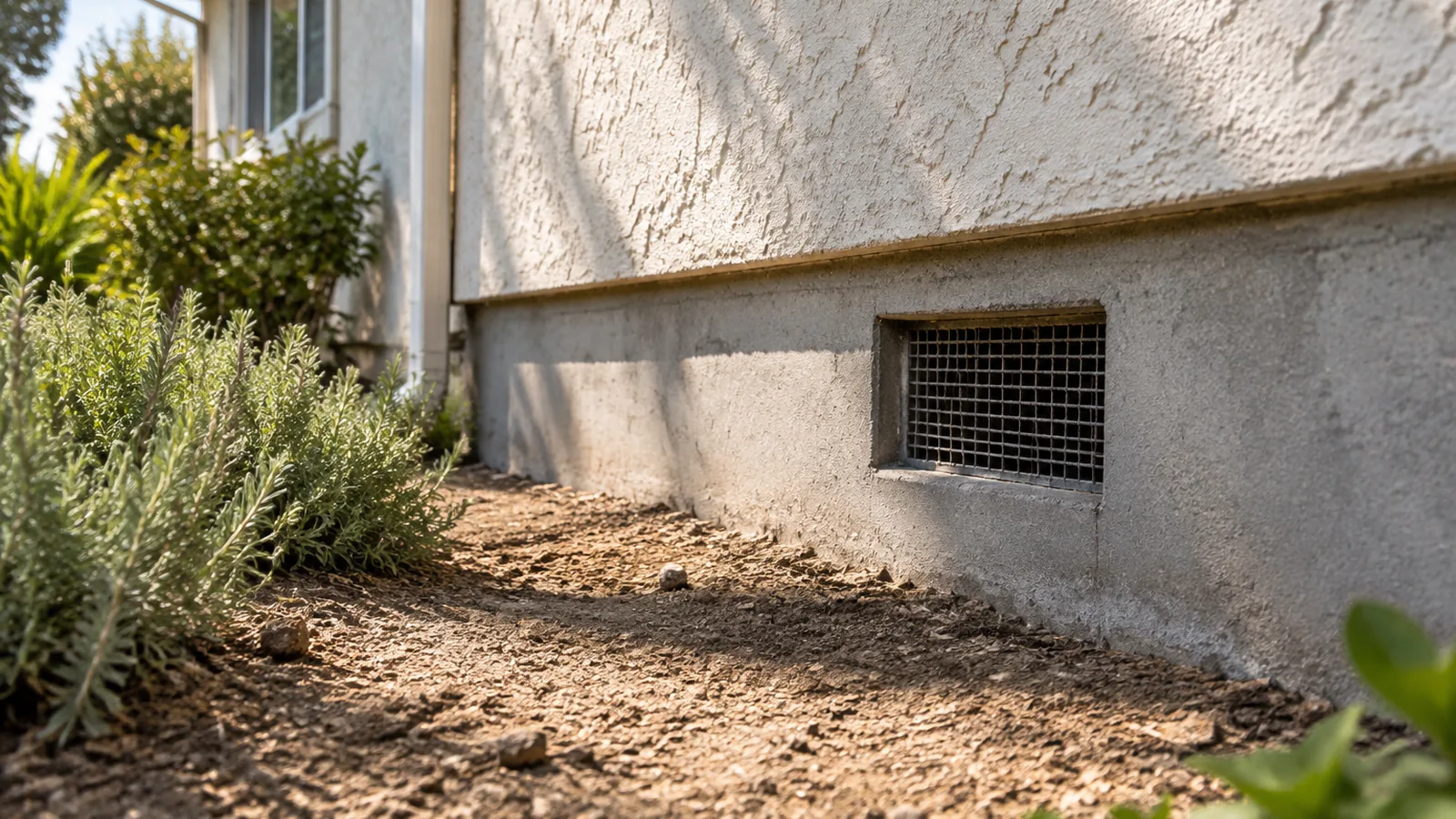
Open foundation vents can look like a straightforward answer to a damp crawl space: let more air in and let moisture out. But crawl space ventilation vents are only one part of a building system. Depending on the source of water and the moisture content of outdoor air, more airflow may help, do very little, or bring humid air into contact with cooler surfaces.
This guide takes a different route from a vent-selection or vent-sizing article: it focuses on how to think about moisture symptoms, what a vent can and cannot tell you, and when to call the right professional. The current Orange County Attic CleanUp & Wildlife Control website describes wildlife removal and entry-point sealing, not crawl-space ventilation installation, encapsulation, or moisture remediation.
Quick answer: do crawl space ventilation vents always dry the space?
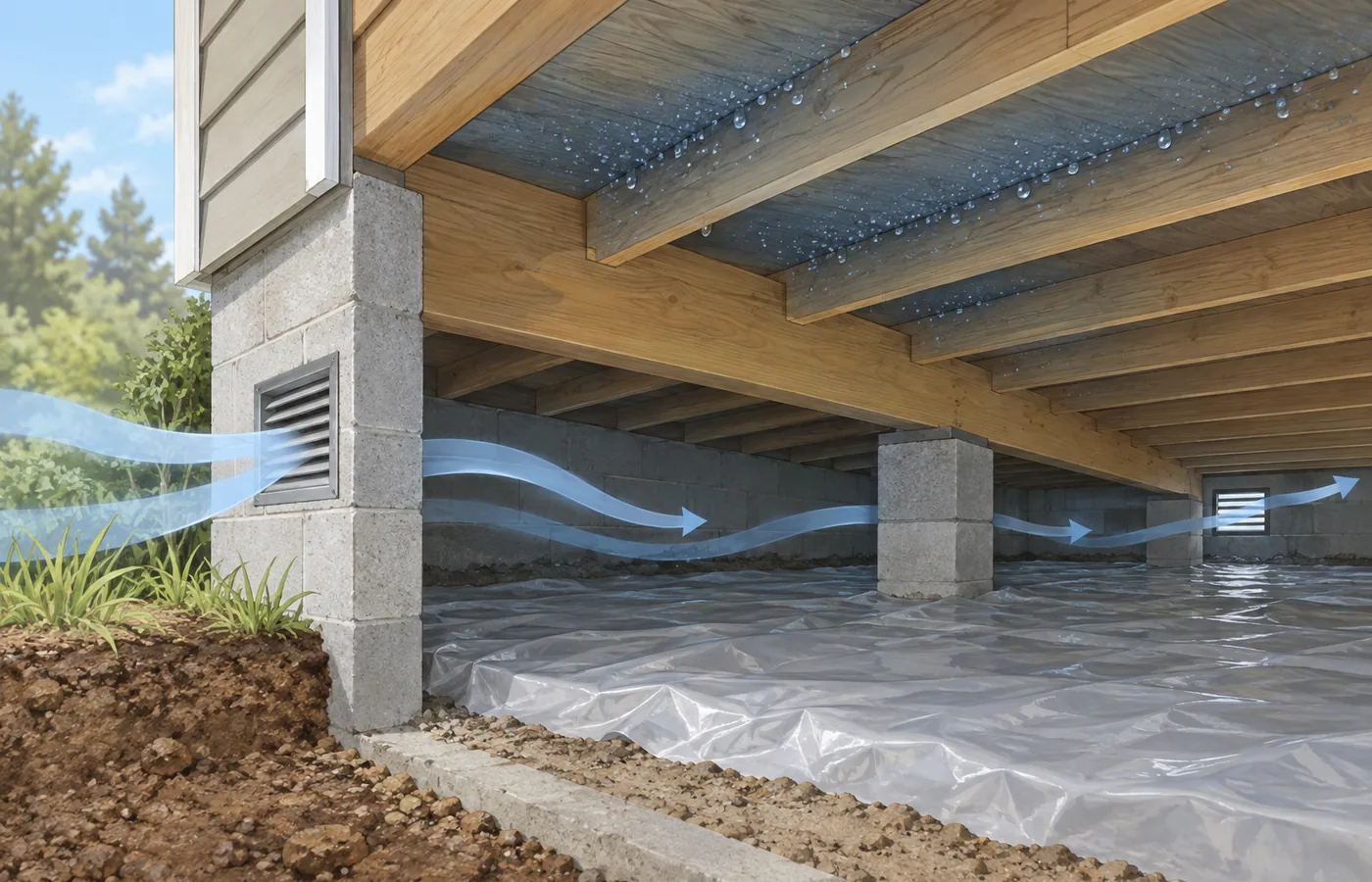
No. Crawl space ventilation vents exchange indoor crawl-space air with outdoor air, but ventilation alone does not remove every moisture source. If outdoor air contains more water vapor than the air inside, or meets surfaces cooler than its dew point, added airflow can contribute to condensation. The right response depends on the source, the home's assembly, and local requirements.
Why more airflow does not always mean less moisture
Ventilation moves air; it does not automatically make that air dry. The amount of water vapor in outdoor air changes with weather and time of day. A crawl space can also stay cooler than the air outside. When warm, moisture-laden air reaches a sufficiently cool surface, water may condense there, much like droplets forming on a cold drink.
Relative humidity by itself can be misleading. It describes how close air is to saturation at its current temperature, not the full amount of water vapor it carries. A building professional may compare temperature, relative humidity, and dew point over time to understand whether ventilation is likely to dry a space or add moisture under the conditions observed.
The U.S. Department of Energy's Building America overview explains that, in humid climates, outdoor air can carry more moisture into a crawl space rather than dry it. That is a general building-science observation, not a diagnosis of an Orange County home or a recommendation to close its vents. The DOE's guide to unvented, conditioned crawl spaces also stresses that an alternate assembly is a designed approach, not simply a vent blocked off.
Start with the moisture pattern, not the vent hardware
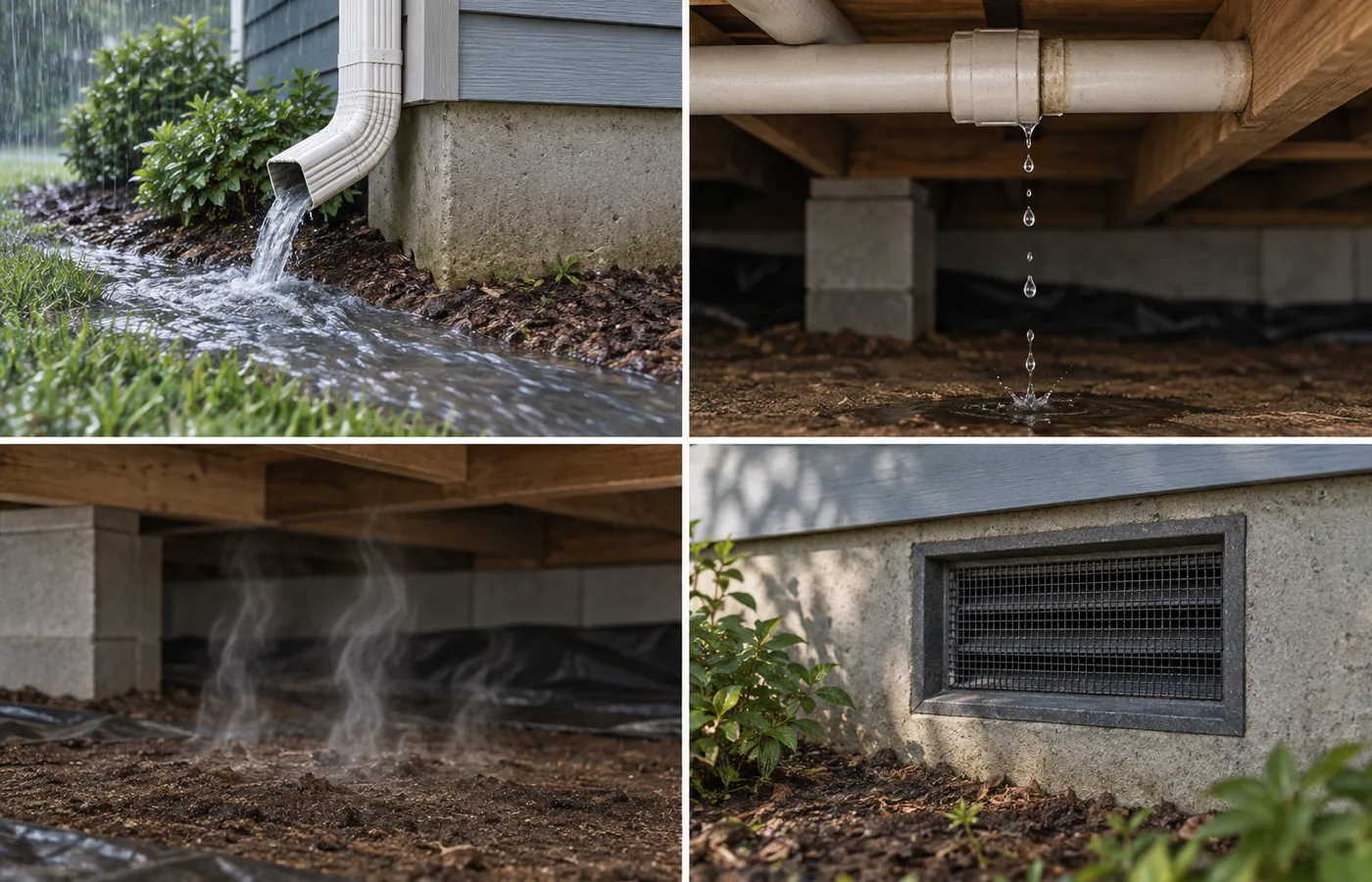
A damp crawl space can have more than one contributing factor. A vent that looks blocked or damaged is worth noting, but it does not prove that the vent caused the moisture or that changing it will fix the problem. Look for patterns from a safe, accessible vantage point and record what you observe without entering an unsafe space or disturbing materials.
| What you notice | Possible area to investigate | Reasonable next step |
|---|---|---|
| Water or damp soil after rain | Roof runoff, downspouts, grading, drainage, or water entering near the foundation | Ask a qualified drainage or building professional to assess the site and water path. |
| A recurring wet spot near a pipe or mechanical line | Supply or drain plumbing, or equipment condensate | Have the relevant licensed plumbing or HVAC professional identify the source. |
| Broad dampness across exposed soil | Ground moisture, a missing or damaged ground vapor retarder, or other site conditions | Request a crawl-space assessment from a qualified building-science professional. |
| Condensation on framing, ducts, or other cool surfaces | Air temperature, moisture level, surface temperature, and air leakage | Ask a qualified professional to evaluate conditions over time before changing ventilation. |
| Droppings, nesting material, gnawing, or animal sounds | Possible wildlife activity or an access point; signs alone do not confirm the route or animal | Do not reach inside. Photograph from a safe distance and contact an appropriate wildlife specialist. |
These clues are starting points, not diagnoses. A musty odor, for example, cannot identify a moisture source by itself. Likewise, a wet surface in one visit may not show whether the condition is persistent, seasonal, or tied to a recent leak or rainfall.
What can a vent tell you, and what can it not tell you?
A visible vent can show whether an opening is present, whether its exterior screen appears intact, and whether leaves, soil, or other debris seem to obstruct it. Those observations are useful context for an assessment. They do not reveal the crawl space's full airflow, the amount of water vapor in the air, or whether the overall design is intended to be vented or unvented.
Likewise, the number or apparent size of vents is not enough to determine whether a system is appropriate. Rated free area, the full building assembly, local code, and site conditions can matter. This article does not provide a vent count, sizing calculation, or retrofit instruction. For the vent-type, code, and sizing overview, keep that detail in the separate crawl-space air-vents guide; this page is intentionally about moisture clues and diagnosis.
A screen or cover may affect airflow, but adding one does not resolve a roof-drainage problem, plumbing leak, ground moisture, or condensation mechanism. Ventilation and moisture control are related, not interchangeable.
Should you add a fan or close a vent to fix dampness?
Do not make a permanent change based only on a damp smell, a season, or a product recommendation. A fan changes how air moves; it does not stop a plumbing leak, redirect roof runoff, or manage soil moisture on its own. Depending on the design, added airflow can also draw air from other parts of the building. A qualified professional should assess the source and the existing system before equipment or vent changes are considered.
Closing a vent is not a complete moisture-control plan either. California's 2025 Residential Code addresses under-floor spaces through different vented and unvented provisions in Section R408. The unvented option has its own requirements; it is not equivalent to plugging an opening. The California Building Standards Commission's code page lists the 2025 California Building Standards Code as effective January 1, 2026. The current code text and local amendments should be checked for the specific property and project.
For code interpretation or a proposed construction change, contact the local building department or a qualified California building professional. The DOE resources cited here are educational references, not California code approval or a substitute for a property-specific evaluation.
A practical crawl-space moisture check for homeowners
- Note when the condition appears. Record whether you noticed it after rain, during a warm or cool spell, or continuously. A simple timeline is more useful than a one-time guess.
- Look outside first. From a safe position, note visible downspout discharge, standing water, soil piled against the foundation, or an obvious damaged vent screen. Do not dig, remove covers, or enter a confined area.
- Record the location and pattern. If a visible damp mark is near a pipe, note that. If the concern appears broad or follows a storm, record that too. Avoid describing a suspected cause as confirmed.
- Keep ventilation changes on hold. Do not permanently block, seal, or enlarge a vent based on this checklist. Ask a qualified building professional to review the complete assembly and applicable code.
- Match the call to the evidence. Use a plumber or HVAC professional for a suspected line or condensate leak, a building or drainage professional for moisture and site conditions, and a wildlife specialist for signs of animal activity.
If wildlife appears to be involved, do not touch droppings, disturb a nest, or reach through a foundation opening. If you are in Orange County, contact Orange County Attic CleanUp & Wildlife Control to describe the signs and confirm whether the team's wildlife service covers your situation or call (877) 395-6877. The published site does not verify crawl-space ventilation or encapsulation work.
Key takeaways
- Crawl space ventilation vents move air, but airflow alone does not identify or remove every moisture source.
- Outdoor air can add moisture under some conditions; temperature and dew point matter, not just the vent being open.
- Rain-related dampness, a localized leak, broad soil moisture, condensation, and animal signs point to different questions for a professional to assess.
- A fan, cover, or sealed assembly is not a universal fix. Do not permanently change vents without reviewing the whole system and local requirements.
- Use a building professional for moisture or code issues, and a wildlife specialist for evidence of animal activity.
Frequently asked questions
Can more crawl-space ventilation make moisture worse?
It can under some conditions. If outdoor air carries more water vapor and encounters cooler crawl-space surfaces, added air exchange may contribute to condensation instead of drying the space. The effect depends on weather, surface temperatures, moisture sources, and the home's design. A professional should evaluate the actual conditions before a vent or fan is changed.
Why is a crawl space damp even when its vents are open?
Open vents do not rule out water entering from rain or drainage, a plumbing or condensate leak, moisture rising from soil, or condensation on cool surfaces. A vent opening also does not show how much air is moving through the entire space. Record where and when dampness appears, then have the likely source assessed rather than assuming the vents need to be enlarged.
Will a crawl-space fan dry out the area?
Not necessarily. A fan moves air, but it does not repair a leak, control bulk water, or address every source of soil moisture. Outdoor air may be more humid than the crawl-space air at a given time, and a fan can alter pressure and airflow paths. Ask a qualified building professional to assess the assembly and moisture conditions before adding equipment.
Should I close crawl-space vents if I smell a musty odor?
No single odor establishes the cause, and closing a vent can change the home's ventilation design. A musty smell may warrant investigation, but it is not a reliable stand-alone test for mold, a leak, or a ventilation fault. Avoid blocking the vent and ask a qualified building professional to inspect the source and the crawl-space system.
Who should I call about crawl-space moisture or animal activity?
For water entry, condensation, drainage, or code concerns, contact a qualified building, drainage, plumbing, or HVAC professional based on the evidence. For droppings, nesting, gnawing, or animal sounds, contact a wildlife specialist and confirm that crawl-space work is within the provider's scope. Do not enter an unsafe area or handle wildlife or waste.
Next steps for Orange County homeowners
When a crawl space is damp, start by asking where the moisture may be coming from, not by assuming that more airflow or a sealed vent is the answer. Document visible conditions safely, leave permanent ventilation changes to a qualified professional, and confirm that any advice matches California's current code and local requirements.
If you see signs of wildlife near the crawl space, contact Orange County Attic CleanUp & Wildlife Control to discuss the evidence and verify service scope or call (877) 395-6877. For moisture-control, ventilation, or encapsulation work, use a qualified building professional; those services are not confirmed on the client's website.
Can more crawl-space ventilation make moisture worse?
It can under some conditions. If outdoor air carries more water vapor and encounters cooler crawl-space surfaces, added air exchange may contribute to condensation instead of drying the space. The effect depends on weather, surface temperatures, moisture sources, and the home's design. A professional should evaluate the actual conditions before a vent or fan is changed.
Why is a crawl space damp even when its vents are open?
Open vents do not rule out water entering from rain or drainage, a plumbing or condensate leak, moisture rising from soil, or condensation on cool surfaces. A vent opening also does not show how much air is moving through the entire space. Record where and when dampness appears, then have the likely source assessed rather than assuming the vents need to be enlarged.
Will a crawl-space fan dry out the area?
Not necessarily. A fan moves air, but it does not repair a leak, control bulk water, or address every source of soil moisture. Outdoor air may be more humid than the crawl-space air at a given time, and a fan can alter pressure and airflow paths. Ask a qualified building professional to assess the assembly and moisture conditions before adding equipment.
Should I close crawl-space vents if I smell a musty odor?
No single odor establishes the cause, and closing a vent can change the home's ventilation design. A musty smell may warrant investigation, but it is not a reliable stand-alone test for mold, a leak, or a ventilation fault. Avoid blocking the vent and ask a qualified building professional to inspect the source and the crawl-space system.
Who should I call about crawl-space moisture or animal activity?
For water entry, condensation, drainage, or code concerns, contact a qualified building, drainage, plumbing, or HVAC professional based on the evidence. For droppings, nesting, gnawing, or animal sounds, contact a wildlife specialist and confirm that crawl-space work is within the provider's scope. Do not enter an unsafe area or handle wildlife or waste.
Have Questions About Your Attic in Orange County?
Our specialists inspect your attic, identify moisture or rodent entry points, and give you an upfront, no-pressure repair plan.