How to Get Rid of Mice in Your Attic: A Safe Step-by-Step Plan
Scratching above the ceiling at night is one of those sounds you can't unhear. If you're wondering how to rid mice in an attic without making things worse, the good news is that there's a clear, safe order to follow. The bad news is that most guides split it across five different pages, and some of them still recommend methods public health agencies now advise against.
This guide puts the whole process in one place, written for Orange County homeowners by the team at Orange County Attic CleanUp. It covers how to confirm mice are really the problem, how to get them out, how to keep them out, and when cleanup becomes a job for a professional.
Quick answer: To get mice out of an attic, first confirm rodent activity without disturbing droppings or insulation. Reduce food and shelter, use snap traps placed along travel paths, and seal entry points with durable materials once active mice are handled. If insulation is contaminated, wiring is damaged, or the space is hard to reach, call a qualified professional.
Hear Scratching Overhead in Orange County?
Book a free inspection to confirm rodent activity and get a clear scope.
The Safest First Steps If You Hear Mice in the Attic
A quick answer: confirm, control, seal, then assess cleanup
The order matters more than any single product. Skipping a step is the most common reason mice come back.
- Confirm. Look for droppings, gnaw marks, nests, and entry points from safe, accessible spots. Don't diagnose from noise alone.
- Control. Remove food sources and trap the mice already inside, following current safety guidance.
- Seal. Close every gap a mouse can use, with materials mice can't chew through.
- Assess cleanup. Decide whether droppings, nests, and insulation can be handled safely yourself or need professional decontamination.
When not to enter the attic
Attics are hot, cramped, and full of hazards: exposed wiring, nails, ductwork, and ceiling drywall that won't hold your weight. Stay out, or stop and call for help, if:
- The attic has no safe walking surface or you'd have to step between joists.
- You see heavy droppings, large nests, or a strong musky or urine odor.
- You notice chewed wiring, damaged ductwork, or HVAC equipment in the activity area.
- It's a hot Southern California afternoon and attic temperatures are high.
If any of those apply, the safest move is a professional look. Request a free attic inspection and get a clear picture before anyone disturbs the space.
How to Tell Whether Mice Are in Your Attic
Droppings, gnaw marks, nests, and scratching
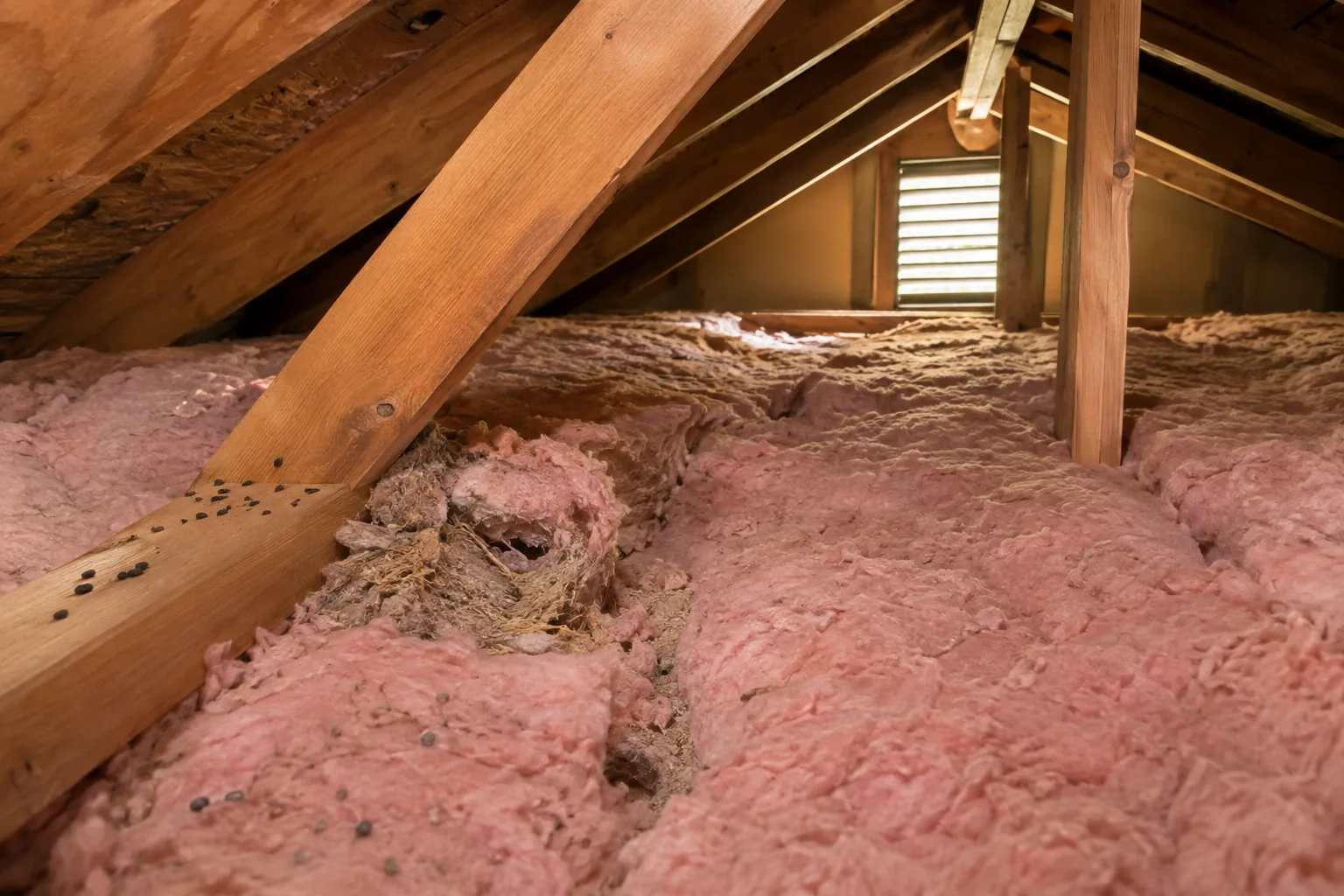
House mice are small, nocturnal, and leave consistent evidence. According to the UC Statewide IPM Program's house mouse guide, the main signs are droppings, fresh gnaw marks, tracks, nests of finely shredded paper or fiber, and a musky odor in longer infestations. Common attic signs include:
- Droppings: small, dark, rice-sized pellets along rafters, near the attic hatch, or on top of insulation.
- Tunnels and trails: shallow paths pressed into loose-fill or fiberglass insulation.
- Nests: balls of shredded insulation, paper, or fabric tucked into corners and eaves.
- Gnaw marks: chewed wood, cardboard boxes, wiring jackets, or duct wrap.
- Sounds: light scratching or scurrying at night, often near walls or the roof edge.
Mouse or rat: clues that need professional identification
Southern California attics also attract roof rats, squirrels, and other wildlife, and the right control plan depends on the species. Rat droppings are noticeably larger, rats tend to be more cautious around new traps, and heavier thumping usually points to something bigger than a mouse. If you're not sure what you're dealing with, have it identified before buying traps. A mouse-only plan won't solve a rat problem.
Where to check from safe, accessible areas
You can learn a lot without climbing onto the roof. From the ground or from a safe spot at the attic hatch, look at:
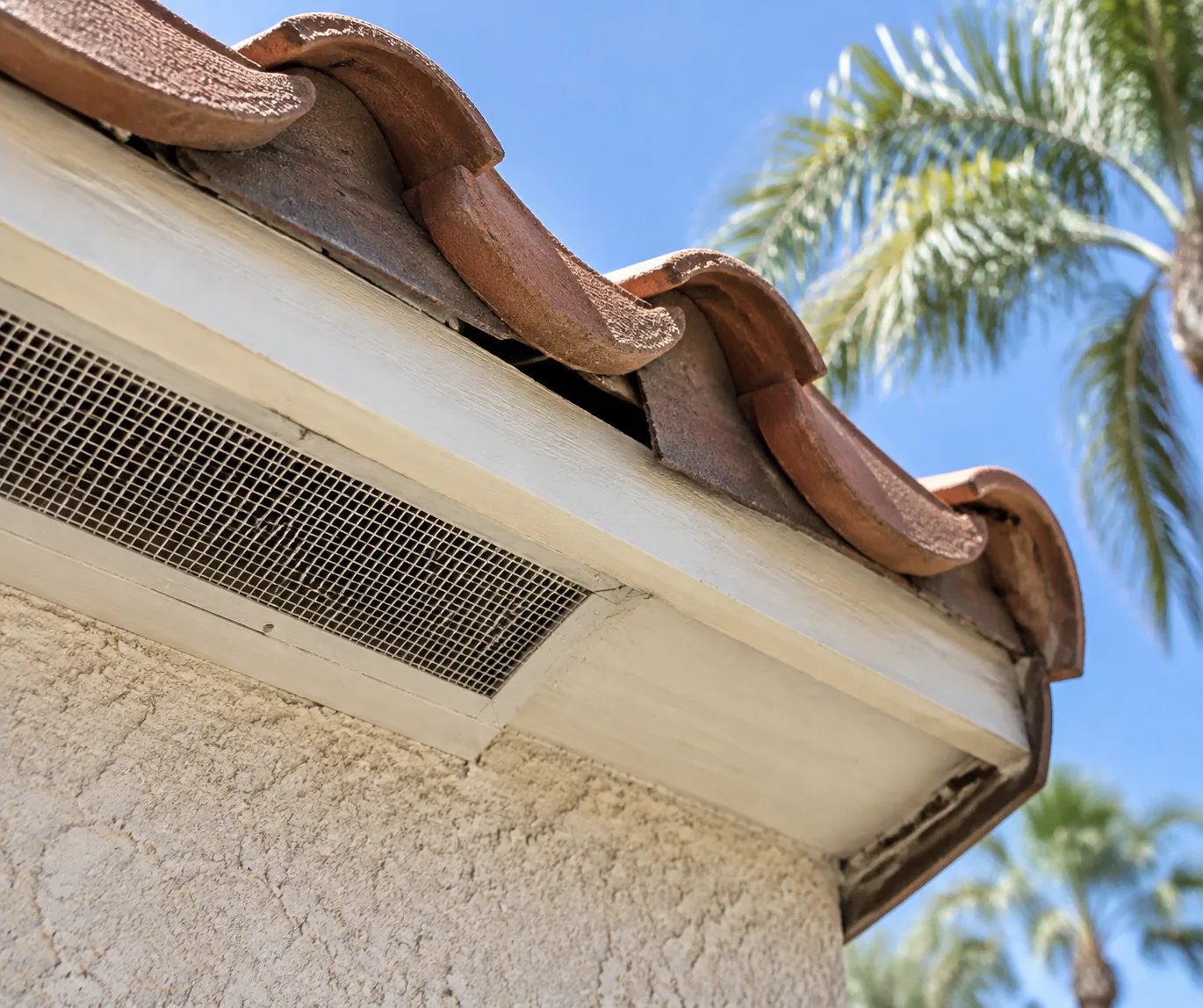
- Eaves and soffits, especially where they meet the roof edge
- Roof and gable vents with torn or loose screens
- Gaps around utility lines, cable entries, plumbing vents, and AC line sets
- Tree branches, vines, or shrubs touching the roofline
How to Get Rid of Mice in Your Attic and Keep Them From Returning
Reduce food, water, and nesting opportunities
Mice stay where food and shelter are easy. The CDC's guidance on sealing up to prevent rodents recommends storing food in thick plastic, metal, or glass containers, putting pet food away overnight, using lidded garbage cans, and moving woodpiles and compost well away from the house. In the attic, clear out cardboard boxes and stored fabric that make easy nesting material.
Traps, bait, children, and pets: follow current safety guidance
The CDC's trapping guidance recommends traditional snap traps sized for mice and advises against glue traps and live traps, because frightened rodents urinate more and raise your exposure risk. Practical tips:
- Place traps along walls and rafters where you've found droppings, with the baited end against the wall.
- Use a small amount of bait, such as peanut butter, and keep traps out of reach of children and pets.
- Use enough traps to make the trapping period short. UC IPM notes mice rarely travel more than about 30 feet from their nest, so space traps closely in active areas.
- Check traps daily. When a week passes with no captures and no new signs, activity has likely stopped.
Skip ultrasonic devices: UC IPM reports little evidence they drive established mice out. Poison baits carry real risks to children, pets, and wildlife, and California restricts what's sold for residential use, so persistent infestations are better handled by a licensed professional. Also note that in California it's illegal to relocate live-caught wildlife, including house mice, off the property without a permit.
Seal entry points after planning for active rodents
Mice can squeeze through an opening about 1/4 inch wide, roughly the width of a pencil. Sealing is the step that makes everything else stick, but timing matters: close gaps once you've addressed the mice inside so you don't trap them in the attic.
- Use hardware cloth, sheet metal, lath screen, or cement for larger gaps.
- Steel wool works as a temporary plug, but UC IPM notes it can rust over time.
- Avoid relying on foam, plastic, rubber, or wood alone, since mice can chew through them.
- Repair torn vent screens and add metal flashing where gnawing is a concern.
Roofline and soffit work often means ladders and roof access. If that's beyond what you're comfortable with, our licensed technicians handle trapping and exclusion together. Schedule your free inspection to find every entry point.
How to Clean Up Mouse Droppings and Damaged Insulation Safely
Why you should not sweep or vacuum droppings or nests
This is the one rule everyone should know. The CDC's rodent cleanup guidance says not to sweep or vacuum rodent urine, droppings, or nesting material, because it can send contaminated particles into the air. For small, accessible messes, the CDC recommends:
- Ventilating the space and putting on rubber or plastic gloves.
- Spraying droppings and urine with a bleach solution or EPA-registered disinfectant until very wet, then letting it soak for about 5 minutes or per the label.
- Wiping up with paper towels, bagging the waste, and disposing of it in a covered garbage can.
- Disinfecting the surrounding area and washing hands thoroughly afterward.
What changes when insulation, wiring, or HVAC is affected
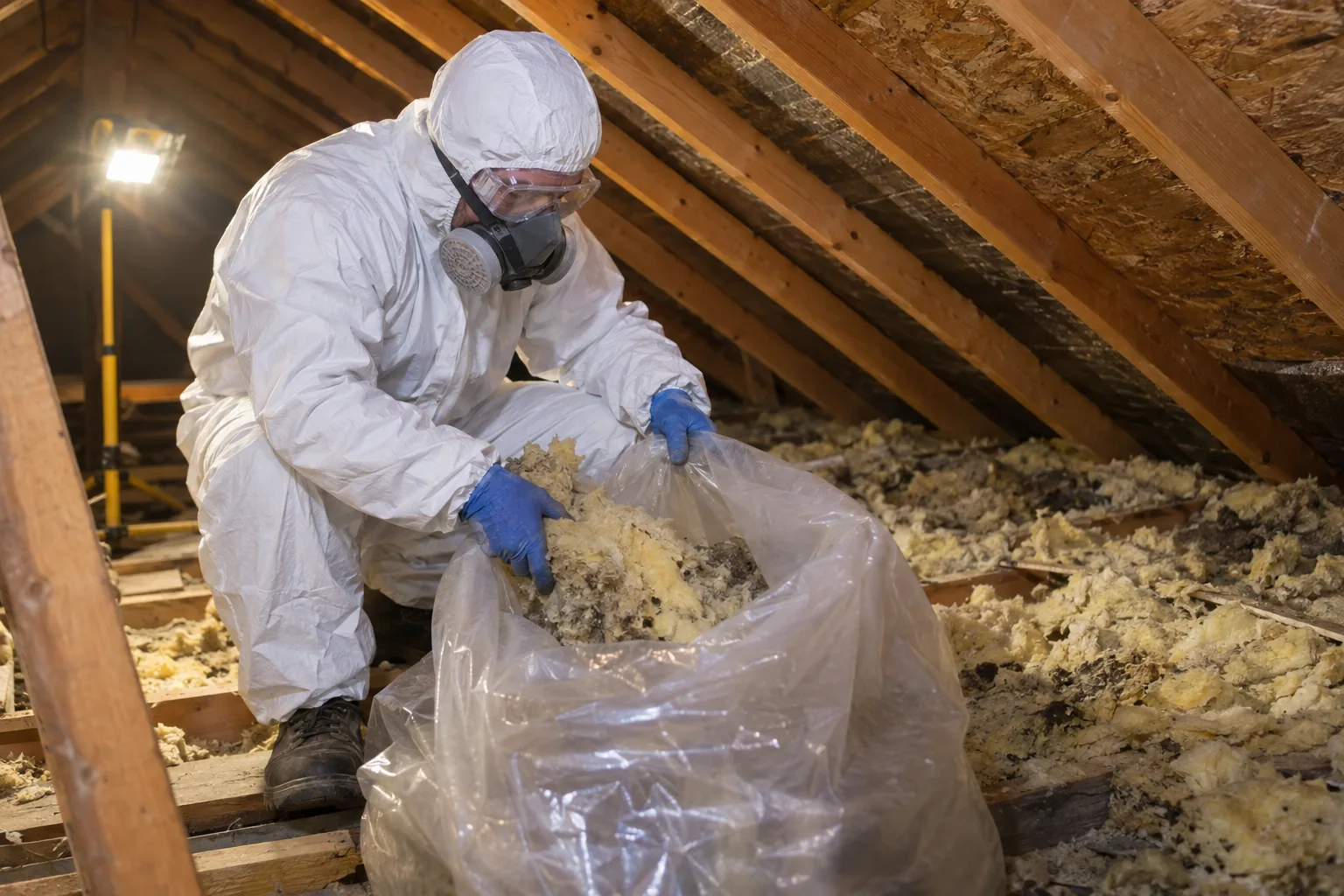
Insulation is porous, so it absorbs urine and hides droppings in ways a hard floor doesn't. Not every mouse problem requires full insulation replacement, but widespread droppings, nesting, odor, or matted insulation usually mean the affected material needs to come out. The CDC specifically recommends contacting a professional when rodents have reached heating and cooling ventilation systems. Chewed wiring should always be checked by a qualified electrician.
When to get qualified cleanup help
| Situation | Reasonable DIY? | Better handled by a pro |
|---|---|---|
| A few droppings near the attic hatch | Yes, following CDC cleanup steps | If droppings keep reappearing |
| Droppings or nests spread across insulation | No | Yes: removal and decontamination |
| Strong odor drifting into living spaces | No | Yes: source removal and decontamination |
| Chewed wiring or damaged ductwork | No | Yes: rodent specialist plus electrician or HVAC tech as needed |
| Activity in areas you can't reach safely | No | Yes: inspection and exclusion |
| Mice still active after a week of trapping | Reassess | Yes: full inspection to find missed entry points |
If your attic lands in the right-hand column, book a free inspection and quote. We'll tell you what actually needs to be done, including when it doesn't.
How to Prevent Another Attic Mouse Problem
Check roofline gaps, vents, screens, and utility penetrations
Walk the exterior a few times a year, especially heading into cooler months when mice look for shelter. Note any new gaps at eaves, soffits, and roof edges, damaged vent screens, and openings around pipes and cables.
Reduce outdoor food sources and clutter near the home
Trim trees and shrubs away from the roof, keep fallen fruit picked up, store birdseed and pet food in sealed containers, and keep yard debris and woodpiles away from the walls.
Recheck for new signs after repairs
After sealing and cleanup, do a quick check at the attic hatch every few weeks. Fresh droppings, new gnaw marks, or returning noises mean an entry point was missed and should be addressed quickly.
What Professional Attic Mouse Removal and Cleanup Can Include
For more than 20 years, Orange County Attic CleanUp has restored attics across Orange County after rodent and wildlife activity. Our licensed, bonded, and insured technicians follow one sequence so nothing falls through the gaps.
Inspection and humane trapping or removal
Every job starts with a free inspection to identify the species, activity areas, and entry points, followed by a trapping or removal plan matched to what we find.
Decontamination, exclusion, and insulation restoration
| Service step | What it involves |
|---|---|
| Contaminated material removal | Extracting soiled insulation, nests, and droppings |
| Decontamination | Antimicrobial treatment of attic surfaces to neutralize scent markers and odor |
| Exclusion | Sealing entry points so mice can't walk back in |
| Insulation restoration | Installing fresh insulation to current Title 24 efficiency standards |
Quotes depend on factors like attic size and access, how far contamination has spread, the number of entry points, and how much insulation needs replacing.
Questions to ask before approving attic work
- Which species did you confirm, and how?
- Which entry points did you find, and how will each be sealed?
- Does the quote include removal, decontamination, exclusion, and insulation, or only part of it?
- How will you confirm activity has stopped before sealing the final openings?
Key Takeaways
- Follow the order: confirm, control, seal, then assess cleanup.
- Use snap traps along travel paths, and skip glue traps, live traps, and ultrasonic devices.
- Seal gaps of 1/4 inch or larger with metal, hardware cloth, or cement after active mice are handled.
- Never sweep or vacuum droppings or nests. Disinfect first, then wipe and bag.
- Widespread contamination, chewed wiring, HVAC involvement, or unreachable activity calls for a professional.
Get Mice Out of Your Attic for Good, the Safe Way
Knowing how to rid mice in an attic comes down to doing the right steps in the right order: confirm the activity, control the mice inside, seal every entry point, and clean up without stirring contamination into the air. Many homeowners can handle a small, early problem. When droppings have spread through the insulation, wiring is involved, or mice keep coming back, it's time for a full inspection.
Orange County Attic CleanUp handles humane removal, attic decontamination, exclusion, and insulation restoration under one roof, with 24/7 emergency animal removal across Orange County. Book your free attic inspection or call (877) 395-6877. Want more attic advice first? Browse our attic cleanup and repair guides.
Ready to Solve Your Attic Mouse Problem?
Our Orange County specialists identify every entry point, trap humanely, decontaminate thoroughly, and restore your insulation.
Can mice leave the attic on their own?
Rarely. As long as an attic offers warmth, shelter, and a nearby food source, mice have little reason to leave, and house mice breed quickly when conditions are stable. Even if activity seems to fade, the entry points remain open for the next group. Reducing food, trapping the mice already inside, and sealing gaps is the reliable way to end the problem.
Do mouse droppings mean insulation must be replaced?
Not always. A few droppings near the hatch can often be disinfected and removed following CDC steps. Replacement makes more sense when droppings, urine, and nesting are spread through the insulation, when odor is drifting into the home, or when the insulation is matted and no longer performing. An inspection can tell you which areas need removal and which don't.
How small an opening can a mouse use?
The CDC notes a mouse can fit through a hole about 1/4 inch wide, roughly the width of a pencil. That's why small gaps at eaves, soffits, vents, and utility penetrations matter so much. Seal openings with materials mice can't chew, such as hardware cloth, sheet metal, or cement, rather than foam or plastic alone.
Are glue traps a good option for mice in the attic?
The CDC advises against glue traps and live traps for household rodent control because stressed rodents urinate more, which increases exposure risk. Glue traps also tend to catch younger mice while adults avoid them. Traditional snap traps sized for mice and placed along walls and rafters are the recommended starting point.
Is it safe to vacuum mouse droppings in the attic?
No. The CDC says not to sweep or vacuum rodent urine, droppings, or nesting material, because it can stir contaminated particles into the air. Instead, ventilate, wear gloves, soak the waste with a disinfectant or bleach solution, wait about five minutes, then wipe it up with paper towels and bag it. Heavy contamination should be handled by professionals with proper protective equipment.
How do I know the mice are gone?
According to CDC trapping guidance, when traps catch nothing for about a week and there are no new droppings, gnaw marks, or sounds, activity has likely stopped. Keep checking periodically after sealing entry points. New signs usually mean a missed gap rather than a failed trap.
When should I call an attic cleanup professional?
Call a professional when droppings or nests are spread across insulation, odor reaches your living space, wiring or ductwork is chewed, activity is in areas you can't safely reach, or mice are still active after a week of trapping. Those situations usually need removal, decontamination, and exclusion working together.
Have Questions About Your Attic in Orange County?
Our specialists inspect your attic, identify moisture or rodent entry points, and give you an upfront, no-pressure repair plan.