Rodents in the Attic? Signs, Safe Next Steps and Cleanup
Quick Answer
Rodents in an attic may leave scratching or scurrying sounds, droppings, nesting material, gnaw marks, unusual odors, or disturbed insulation. These signs do not confirm the species or show how extensive the problem is. Avoid unsafe attic access and do not dry-sweep or vacuum droppings; arrange an inspection to assess activity, entry points, and cleanup needs.
Hearing something move above your ceiling at 2 a.m. is unsettling. The good news: you don't have to guess your way through it. This guide explains how to recognize rodents in the attic, what each clue can and cannot tell you, what is safe to do right now, and how removal, sealing, and attic cleanup fit together. If you live in Orange County and want a clear answer fast, Orange County Attic CleanUp offers a free attic inspection and quote.
Ready for a straight answer? Call (877) 395-6877 to schedule your free attic inspection.
How Can You Tell If There Are Rodents in Your Attic?
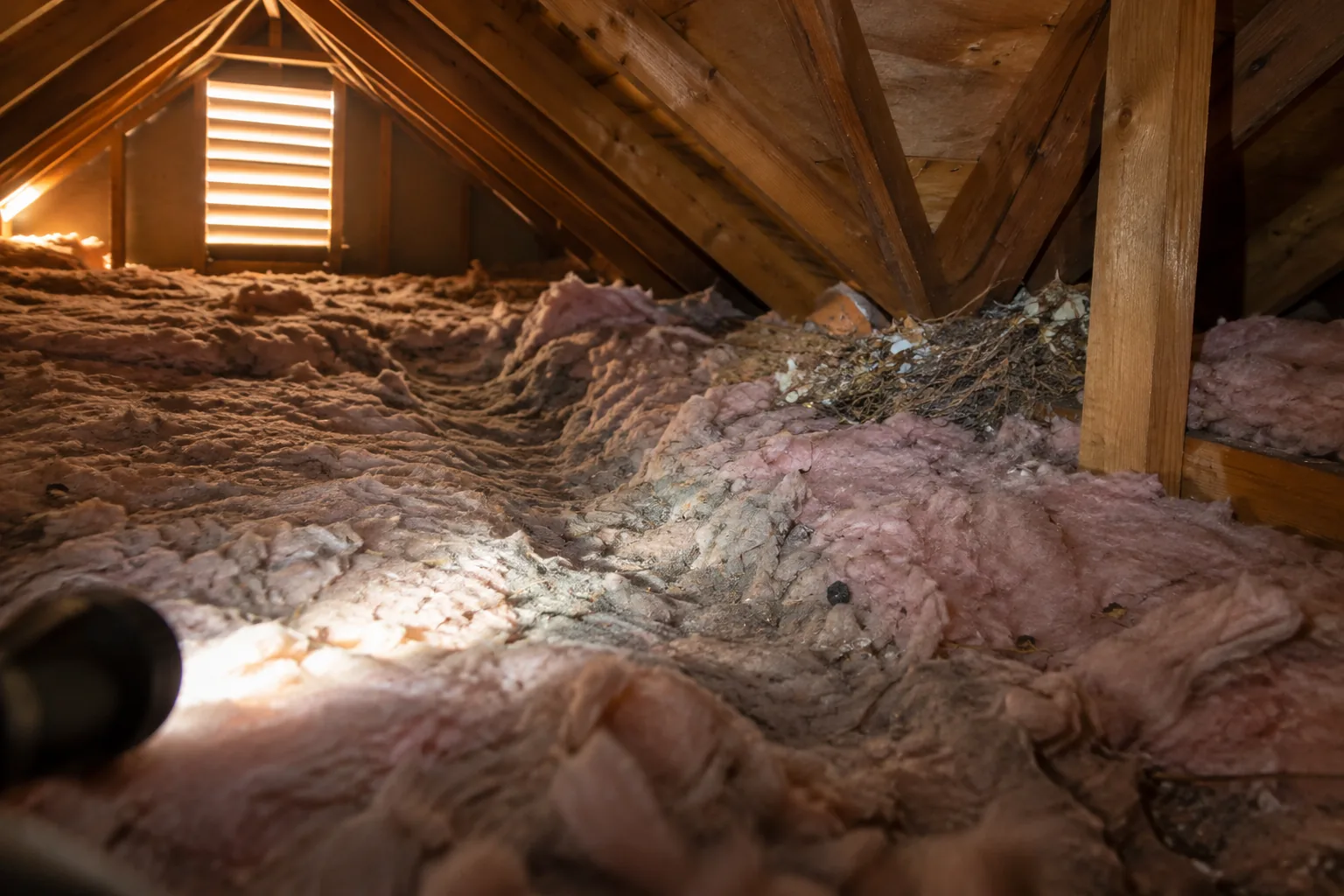
The most common signs of rodents in an attic are night-time scratching or scurrying, small dark droppings, shredded nesting material, chew marks, greasy rub marks, a musty or ammonia-like odor, and tunnels or trails through insulation. One sign alone suggests activity. Several signs together make a stronger case for an inspection.
Scratching, Scurrying, and Gnawing Sounds
Rats and mice are mostly active at night, so noises often start after dark and quiet down around sunrise. Light, quick pattering usually means a small animal on the move. Repeated gnawing sounds in one spot can point to chewing on wood, wiring, or ducts. Sound is a useful first clue, but it is not a reliable way to name the animal.
Droppings, Nesting Material, and Odor
Droppings tend to collect along walls, near insulation edges, and around stored boxes. Nests may be built from shredded insulation, paper, fabric, or plant material. A lingering musty or urine-like smell, sometimes drifting through vents, is another warning sign worth taking seriously.
Grease Marks, Damaged Wiring, Ducts, and Insulation
Rodents travel the same routes over and over, leaving dark, greasy rub marks on beams and around openings. Look for chewed cable jackets, torn flexible ductwork, and insulation that looks flattened, tunneled, or pulled apart. Damaged wiring is a reason to call for help sooner rather than later.
| What you notice | What it may indicate | What it cannot prove |
|---|---|---|
| Night-time scratching or scurrying | Active small animals overhead | The species, how many, or where they enter |
| Small dark droppings | Rodent activity, past or present | Whether the activity is current or how widespread it is |
| Musty or urine-like odor | Urine, nesting, or a possible dead animal | The exact source or extent of contamination |
| Gnaw marks on wood, wiring, or ducts | Chewing rodents using the space | Whether the damage is safe or needs repair |
| Flattened or tunneled insulation | Travel routes or nesting areas | Whether all insulation needs replacing |
What Kind of Rodent Could Be in the Attic?
In Southern California attics, the most likely rodents are roof rats and house mice. Norway rats are possible but usually stay lower in a building. Because sounds and single droppings overlap between species, a hands-on inspection is the most dependable way to confirm what is living in your attic.
Roof Rats and Elevated Entry Routes
Roof rats are agile climbers with tails longer than their head and body. According to the UC Statewide IPM Program's guide to rats, roof rats usually nest above ground in trees, shrubs, and dense vegetation, and indoors they favor attics, walls, and false ceilings. Mature landscaping, which is common across Orange County neighborhoods, gives them easy routes onto the roof.
House Mice and Smaller Gaps
House mice are smaller and can slip through very small openings. Their droppings are smaller too, and their activity can sound lighter and more scattered. Mice often reach attics by climbing inside wall cavities from lower levels.
When the Evidence May Point to a Squirrel or Other Wildlife Instead
Not every attic visitor is a rodent of the rat or mouse kind. Noises during daylight hours, especially early morning, may suggest squirrels. Heavy thumping, large droppings, or torn roof vents can point to raccoons. Because removal and exclusion methods differ by animal, correct identification matters before any plan is set.
How Do Rodents Get Into Attics?
Rodents usually get into attics through small gaps along the roofline, damaged vents, and openings around pipes or wires. Trees, fences, and utility lines act as bridges onto the roof. Finding and documenting every entry point is what separates a lasting fix from a repeat problem.
Eaves, Soffits, Fascia, and Roof Gaps
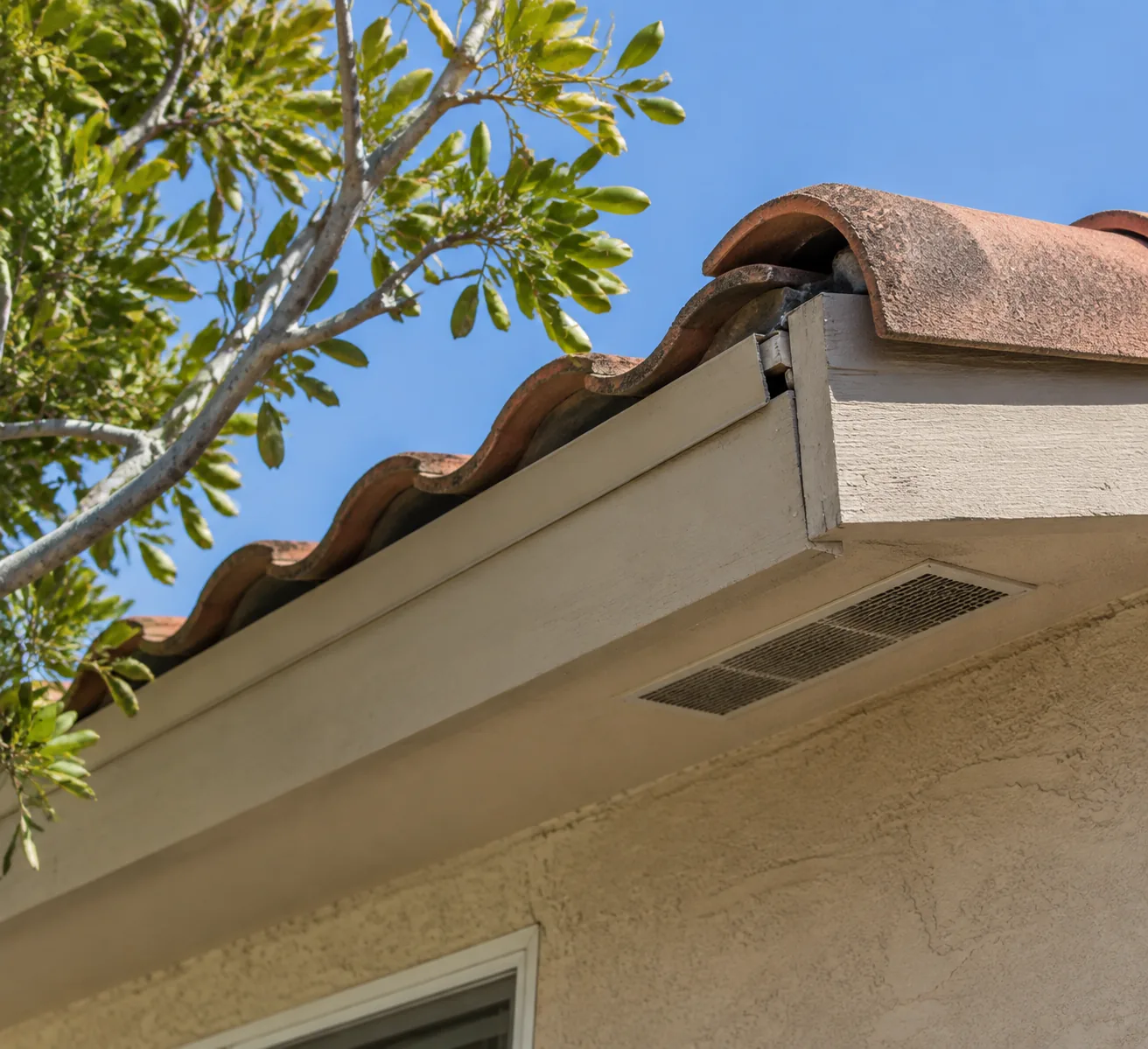
Where the roof meets the walls, small gaps can form from weathering, settling, or past repairs. Loose fascia boards, gaps under roof tiles, and worn soffit panels are common access points.
Vents, Chimneys, and Utility Penetrations
Attic vents with torn or missing screens, roof vents, chimney gaps, and openings where cables, pipes, or AC lines enter the home all give rodents a way inside. UC IPM notes that rats can chew through plastic, foam, wood, and caulk, which is why the sealing material matters as much as the seal itself.
Trees, Fences, and Nearby Routes Onto the Roof
Overhanging branches, climbing vines, and fences close to the house create highways to the roof. UC IPM recommends pruning tree limbs that are within 3 feet of a roof and removing climbing plants from buildings to reduce access.
What Should You Do If You Hear Rodents Overhead?
If you hear rodents overhead, stay out of the attic, note when and where the sounds happen, and keep children and pets away from any droppings you find. Do not sweep or vacuum droppings. Then schedule a professional inspection so activity, entry points, and contamination can be assessed safely.
Observe From a Safe Place and Note Where and When Activity Occurs
Keep a simple log: the time of night, the room below the sound, and any smells or stains you notice. This helps an inspector focus on the right areas faster and gives you a record of whether activity is rising or falling.
Do Not Enter Unsafe Spaces or Disturb Dry Droppings
Attics can be hot, cramped, and easy to fall through between joists. Droppings and nesting material also carry health risks when disturbed. The CDC's rodent cleanup guidance warns not to vacuum or sweep rodent urine, droppings, or nesting materials, because it can send contaminated particles into the air. The CDC also notes that heavy infestations call for additional protective equipment, including appropriate respiratory protection.
When to Arrange an Inspection
Call for an inspection if you hear activity on more than one night, find droppings or chewed materials, notice an odor through your vents, or see any damage to wiring or ducts. Earlier action generally means a smaller cleanup.
How Does Attic Rodent Removal and Cleanup Work?
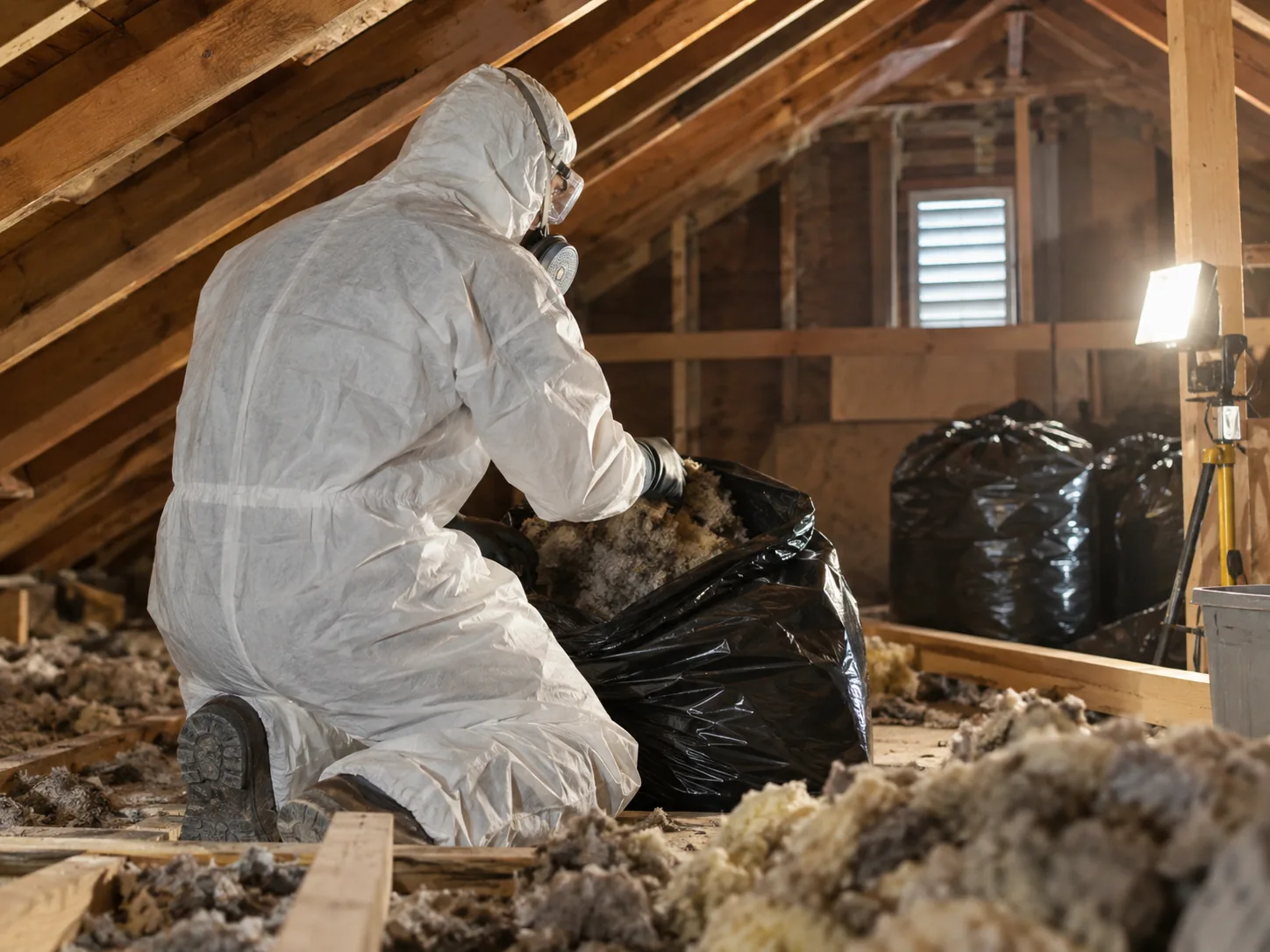
Professional attic rodent removal follows an inspection-led sequence: document the evidence, remove active rodents, seal entry points, clean and decontaminate affected areas, then restore insulation where needed. The exact order and methods depend on the species, the level of activity, and the condition of the attic.
- Inspect and document signs, access, and affected materials. A technician checks the roofline, vents, and attic interior, noting entry points, droppings, nesting areas, and damaged insulation, wiring, or ducts.
- Remove active rodents using an appropriate plan. Orange County Attic CleanUp uses humane trapping for rats and other wildlife, with the approach matched to what the inspection finds.
- Seal identified entry points with suitable materials. Gaps are closed with durable, chew-resistant materials so rodents cannot simply chew back in.
- Clean and decontaminate affected areas, then assess insulation. Contaminated material is removed and surfaces are treated with an antimicrobial decontamination step to neutralize odor and scent markers.
- Confirm follow-up and restoration needs. Where insulation must be replaced, new insulation is installed to current Title 24 efficiency standards, and any structural attic repair needs are addressed.
Want to know exactly what your attic needs? Book a free inspection and quote with Orange County Attic CleanUp.
Do Rodents in the Attic Mean Insulation Must Be Replaced?
Not always. Rodents in the attic do not automatically mean all insulation must be replaced. Light, localized activity may only need targeted cleanup. Widespread droppings, urine saturation, heavy nesting, or strong odor usually justify removing and replacing affected insulation. The scope should follow what the inspection actually documents.
Conditions That May Call for Targeted Cleanup
- Droppings limited to a small, defined area
- Little or no urine staining or odor
- Insulation that is still dry, lofted, and largely undisturbed
When Damaged or Contaminated Insulation May Need Removal
- Droppings and urine spread across large sections of the attic
- Persistent odor that drifts into living spaces or through HVAC vents
- Heavily tunneled, compressed, or nested-in insulation that no longer insulates well
- Evidence of a long-term or heavy infestation
Questions to Ask Before Approving Restoration Work
- Which areas of the attic are affected, and can you show me photos?
- Have all entry points been found and sealed?
- Why is targeted cleanup or full replacement the right call here?
- What decontamination steps are included?
- What insulation will be installed, and to what standard?
Rodent and Attic Cleanup Service in Orange County
Orange County Attic CleanUp handles the full job under one roof: humane trapping, entry-point sealing, attic decontamination, and insulation restoration. One accountable team means no gaps between the company that removes the animal and the one that cleans up after it.
Service Area and Humane Removal Options
We serve homes and commercial buildings across Orange County, including Anaheim, Santa Ana, Irvine, Huntington Beach, Garden Grove, Orange, Fullerton, Costa Mesa, Mission Viejo, Newport Beach, Tustin, Yorba Linda, San Clemente, Laguna Niguel, Fountain Valley, Brea, Dana Point, Laguna Beach, and surrounding communities. Our licensed, bonded, and insured technicians bring 20+ years of local experience, and 24/7 emergency animal removal is available.
What the Free Inspection and Quote Can Clarify
A free inspection can show which animal is likely involved, where it is getting in, how far contamination has spread, and whether your insulation needs targeted cleanup or replacement. You get a clear scope before any work begins.
Key Takeaways
- Common signs of rodents in the attic include night-time noises, droppings, nesting material, gnaw marks, odor, and disturbed insulation.
- No single clue confirms the species; roof rats and house mice are the most likely culprits in Southern California attics.
- Never sweep or vacuum rodent droppings; follow CDC cleanup guidance or leave it to trained professionals.
- Lasting results come from removal plus sealing every entry point plus proper decontamination.
- Insulation replacement should be based on inspection findings, not assumed.
Conclusion: Get a Clear Plan for Rodents in Your Attic
Rodents in the attic are a problem worth solving properly: find the activity, close the entry points, and clean up what was left behind. Guessing or disturbing droppings yourself can make things worse. A documented, condition-based plan gets your attic back to clean, sealed, and quiet.
Hearing noises overhead in Orange County?
Call (877) 395-6877 for your free attic inspection and quote, or visit Orange County Attic CleanUp to learn more about our rodent removal and attic restoration services.
Are rodents in the attic dangerous?
They can be. Rodents can damage wiring, ducts, and insulation, and their urine, droppings, and nesting material can carry disease risks, especially when disturbed and breathed in. The CDC advises against sweeping or vacuuming rodent waste for this reason. The risk depends on the level of activity, so an inspection is the best way to understand your situation.
Can you identify a rodent by the sound?
Not reliably. Light scurrying at night often suggests rats or mice, while daytime activity may point to squirrels, but sounds overlap between species and travel through ceilings in misleading ways. Droppings, entry points, and damage patterns give a clearer picture. A professional inspection is the most dependable way to confirm what is in your attic.
Is it safe to clean rodent droppings yourself?
Small, contained messes can be cleaned by following CDC steps: ventilate, wear gloves, soak droppings with disinfectant, then wipe up with paper towels. Never sweep or vacuum them. Attics with heavy contamination, odor, or soiled insulation call for respiratory protection and proper disposal, which is why professional cleanup is usually the safer choice.
How long does attic rodent removal take?
It depends on the species, how many rodents are present, how many entry points need sealing, and how much cleanup the attic needs. Removal and sealing are often followed by monitoring to confirm activity has stopped, then decontamination and any insulation work. Your inspection should give you a realistic timeline for your specific attic.
What attracts rodents to attics?
Attics offer shelter, warmth, and quiet nesting space close to food sources. In Orange County, mature trees, dense shrubs, fruit trees, and outdoor pet food can draw rodents near the home, while roofline gaps and damaged vents let them in. Trimming branches and sealing openings both help reduce the draw.
Will rodents leave the attic on their own?
Rarely. Once rodents find shelter and a reliable route in, they tend to stay and may continue to breed. Even if activity seems to stop, open entry points leave the attic exposed to new animals. Removing active rodents and sealing the access points is what actually ends the cycle.
Does homeowners insurance cover rodent damage in the attic?
Coverage varies by policy and insurer, and many policies exclude damage from rodents or pests. Check your policy documents or ask your insurance agent directly. Keeping inspection photos and a written scope of work can be helpful if you do file a claim.
How can I prevent rodents from coming back?
Seal gaps along the roofline and around vents and utility lines with chew-resistant materials, keep tree limbs trimmed back from the roof, remove climbing vines, and store food and trash in sealed containers. Periodic checks of the roofline and attic help catch new openings early.
Have Questions About Your Attic in Orange County?
Our specialists inspect your attic, identify moisture or rodent entry points, and give you an upfront, no-pressure repair plan.